










Nubuck or Suede Leather? What's the Difference and How to Choose?

Among the most popular leathers for their texture and personality, nubuck and suede stand out: elegant, soft, and versatile, they appeal to those seeking authentic and natural materials. Although they may seem similar at first glance, they differ in their workmanship, texture, and durability —differences that can impact the final look of shoes, bags, and furnishings.
In this guide, you'll discover how to recognize nubuck and suede leather , their pros and cons , and some practical advice for purchasing online safely and sustainably.
What is Nubuck Leather and Why is It So Popular?
Nubuck leather is a prized and beloved material in the world of fashion and furnishings for its velvety appearance and understated elegance. It's obtained from the outer layer of cowhide, the same as full-grain leather, but the surface is lightly sanded to achieve its characteristic soft, matte texture. The result is a material that combines refinement and durability , perfect for those seeking quality leather that will last.
Compared to other types of leather, nubuck leather retains its natural grain, revealing small irregularities that testify to its authenticity and artisanal quality. It's often chosen for high-end shoes, bags, seating, and upholstery, thanks to its ability to enhance any project with a touch of warmth and sophistication.
Pros of nubuck leather
-
Elegant and velvety appearance, pleasant to the touch
-
Excellent resistance and durability over time
-
Breathable and comfortable even on accessories in contact with the skin
Cons of nubuck leather
-
Sensitive to stains and water, requires specific protective treatments
-
More gentle cleansing than other leather types
-
Colors slightly subject to change over time if not cared for properly
To learn more about the technical characteristics of nubuck, consult this in-depth article .
What is Suede? Softness and Timeless Appeal
Suede is one of the most popular leathers for those seeking a soft, warm material with a timeless appeal. Unlike nubuck , which is obtained from the outer grain, suede comes from the inner, more fibrous side of the hide. This difference in origin gives the material its characteristic velvety, more porous, and matte surface, perfect for creating accessories with a natural, timeless style.
Lightweight and flexible, suede lends itself to a variety of uses: from jackets to handcrafted shoes, from bags to furnishings. It's prized for its ability to absorb color, offering warm, deep hues that add character to every creation.
Pros of suede
-
Extraordinary softness and comfort to the touch
-
Great variety of colors and finishes
-
Ideal for casual or vintage style products
Cons of suede
-
Greater delicacy and tendency to stain easily
-
It absorbs dust and humidity and should be treated with protective sprays.
-
Less wear-resistant than nubuck leather
To learn more about the technical characteristics of suede, consult this in-depth article .
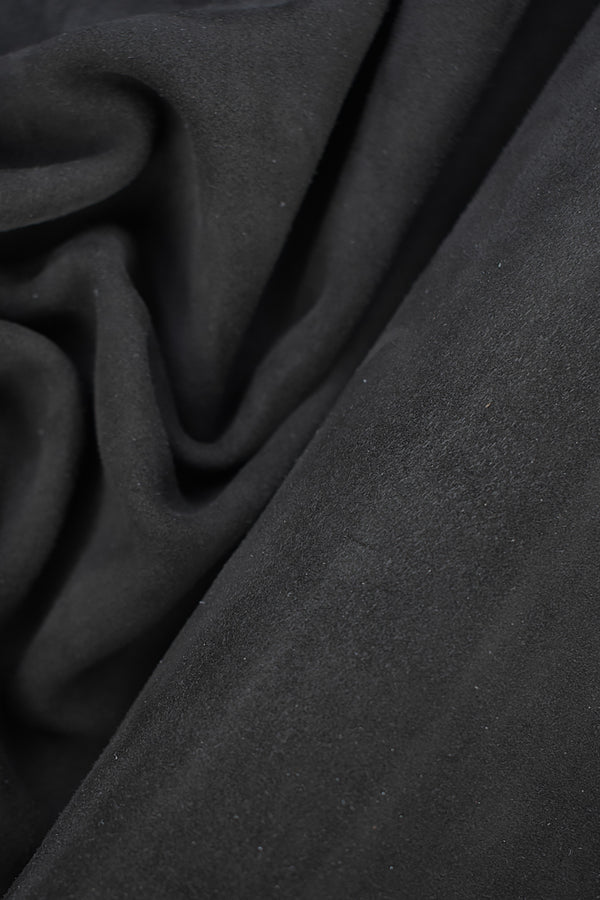
Nubuck or Suede? How to Recognize Them and When to Choose One Over the Other
At first glance, nubuck and suede may seem similar: both have a velvety surface and a matte appearance, but they differ in origin, workmanship, and feel. Understanding these differences helps you choose the most suitable leather based on your intended use and desired result.
Processing Method
Both nubuck and suede leather undergo a light surface sanding , which serves to achieve that characteristic velvety effect.
The main difference, however, lies in the part of the leather that is worked:
-
Nubuck leather comes from the outer side (the grain), the most compact and resistant part.
-
Suede is obtained from the inner side (the flesh), which is softer but also more delicate.
In both cases, sanding is a delicate artisanal step that requires precision so as not to compromise the structure of the material.
Touch and Texture
Touch is the most immediate way to distinguish the two skins:
-
Nubuck offers a silkier feel but also a slightly stiffer and fuller feel, with a fine, compact grain.
-
The suede appears softer and more uniform , with a more porous texture and a more visible velvety effect.
Nubuck holds its shape better over time, making it ideal for structured products, while suede is suitable for more flexible, natural-looking garments and accessories.
Water resistance
Since both materials are rather delicate, you need to be careful with water. Neither type of leather is completely waterproof: both, due to their velvety, porous finish, tend to absorb moisture. However, nubuck offers slightly better resistance , especially if treated with specific water-repellent sprays. Suede, on the other hand, is more sensitive and can stain easily if exposed to rain or liquids.
Value
The grain , from which nubuck leather comes, is considered the most valuable part of the leather: denser and more resistant.
For this reason, nubuck leather tends to be more expensive than suede, which comes from internal layers of leather and requires less rigorous selection.
However, both offer an excellent balance between aesthetics and functionality, with price differences related more to quality and provenance than to the type itself.
Nubuck Leather vs. Suede Leather Comparison Chart
| Characteristic | Nubuck leather | Suede |
|---|---|---|
| Part of the hide | Outer side (flower) | Inner side (meat) |
| Processing | Light sanding of the flower | Smoothing the flesh side |
| Touch | Silky, slightly stiff | Soft and uniform |
| Texture | Compact grain, fine velvet effect | Porous surface, more evident velvet effect |
| Water resistance | Medium-low, can be improved with treatments | Low, very sensitive to humidity |
| Durability over time | Tall, keeps its shape and color | Medium, more flexible but delicate |
| Average value | Higher for the value of the flower | More accessible, variable in quality |
| Ideal use | Bags, shoes, luxury furniture | Jackets, casual footwear, soft accessories |
In short: nubuck leather is ideal for those seeking durability, elegance, and a premium feel , while suede stands out for its softness and natural feel . Two different materials, but united by the same artisanal care that enhances the authentic beauty of the leather.


Where to Buy Nubuck and Suede Leather Online
Buying nubuck or suede leather online can be a surprisingly simple experience if you know where to look. The main advice is to rely on transparent retailers who can tell the story of the material and offer guarantees of provenance and sustainability .
At Zerow , you can find high-end nubuck and suede leathers salvaged from luxury fashion surplus: authentic, sustainable materials ready for a second creative life. Each product page features real photos and detailed technical information about thickness, origin, and tanning process to help you make an informed choice about the best material for your project. And if you need assistance, our consultants are always available to help you find the right leather for you.


