






Coat fabric: wool cloth, melton, loden and how to choose
A guide to coat fabric: wool cloth and melton, loden, double face, bouclé, tweed and speciality fibres, weight, composition, choosing by style and making-up tips.

The best coat fabric is a heavy, dense, warm wool: wool cloth, melton, loden, drap and double face, often enriched with cashmere, alpaca or mohair. Three things matter when choosing: the weight of the cloth, the composition and the fulling, the finishing process that compacts the wool and makes it windproof. A good coating fabric holds its shape, keeps out the cold and lasts for many winters.
This guide is for dressmakers, designers and brands. It covers what wool cloth and melton are, the main coat fabrics, how heavy they should be, which composition to choose, how to match the fabric to the style, making-up tips, and where to find them among Zerow's deadstock fabrics.
Wool cloth and melton: what they are
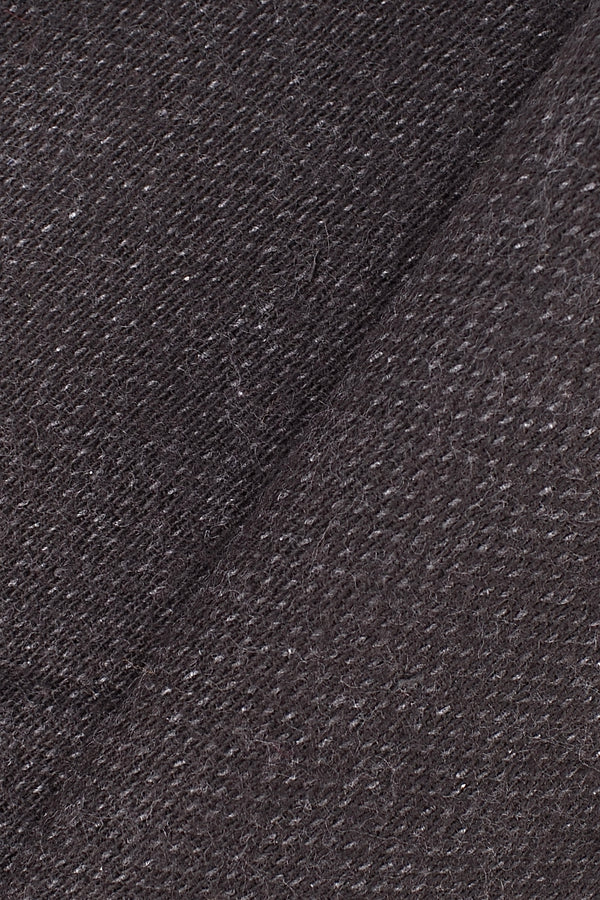
Wool cloth is a woollen fabric, usually plain or twill woven, then fulled: washed and pounded with heat and moisture until the fibres interlock and the cloth shrinks and densifies. The surface becomes closed and felt-like, the weave almost disappears and the cloth does not fray. Melton is the most heavily fulled version: as the Encyclopedia.com entry on fulling explains, it is so compacted that warp and weft can no longer be seen, as with duffel and boiled wool.
The name comes from Melton Mowbray, the English town where it was made. In practice, wool melton is a very dense, smooth cloth with a very short nap and excellent wind resistance: the classic fabric for overcoats, pea coats and duffle coats.
Types of coat fabric
| Fabric | Character | Warmth | Best for |
|---|---|---|---|
| Wool cloth | Dense, closed surface, does not fray | High | Classic coats, jackets, capes |
| Melton | Heavily fulled, smooth, windproof | Very high | Pea coats, duffle coats, structured overcoats |
| Loden | Fulled and raised wool, water-repellent | High | Mountain and city coats |
| Double face | Two bonded faces, often in different colours | High | Unlined coats with raw edges |
| Bouclé | Looped surface, soft handle | Medium-high | Short coats, jackets |
| Tweed | Rustic woollen, mélange | Medium-high | Country-style coats and jackets |
| Camel, alpaca, mohair | Speciality fibres, light and warm, often brushed | Very high | Luxury and oversized coats |
| Wool and cashmere blends | Soft, warm, velvety handle | Very high | High-end coats |


How heavy should coat fabric be?
Weight is measured in grams per linear metre or per square metre (g/m²). As a rough guide:
- Transitional coats and dusters: light to medium cloths, around 350-450 g/m².
- Classic winter coats: medium to heavy cloths, 450 to 650 g/m².
- Very warm coats, pea coats and duffle coats: heavy wool cloth and melton, over 650 g/m².
Heavier cloth is warmer but also stiffer; for soft and oversized coats, a medium weight in speciality fibres gives warmth without bulk.
Composition: wool, cashmere and blends
- Wool and virgin wool: the classic base, warm, breathable and hard-wearing.
- Wool and cashmere blends: softer and warmer for the same weight. More in our guide to cashmere fabric.
- Alpaca, mohair, camel: light and very warm, often with a hairy or lustrous look.
- Blends with polyamide or polyester: a small percentage adds strength and stability; high percentages reduce warmth and breathability.
For wool in general, read our guide to wool fabric.
Choosing coat fabric by style
- Tailored overcoat or chesterfield: wool cloth, melton or wool and cashmere, which hold their shape.
- Pea coat and duffle coat: melton or heavy wool cloth, dense and windproof.
- Oversized or wrap coat: soft double face, alpaca, mohair or bouclé.
- Unlined coat: double face or heavily fulled cloth that can be left raw-edged.
- Jackets and short outerwear: tweed, bouclé or medium wool cloth.


Making-up tips
- Work out the yardage: a long women's coat usually needs 2.5-3 metres in a 140-150 cm width; a men's coat 3-3.5 metres. Always check against your pattern.
- Check the direction of the nap and cut all pieces the same way.
- Use a strong 90/14 or 100/16 needle and a long stitch; a walking foot helps with thick cloth.
- Press with plenty of steam and a pressing cloth, then flatten seams with a clapper.
- Interface the fronts and collar and use a slippery lining in viscose, cupro or silk for comfortable wear.
Where to buy deadstock coat fabric
Zerow sells deadstock coat fabric: surplus and end-of-run cloth from Italian luxury houses and mills, already made and so needing no new production. Quantities are limited and often unrepeatable: once a roll is gone, that fabric may not come back.
Fabrics are sold by the full roll. There is also a selection of fabrics cut to length, usually from a minimum of 10 metres: the details of each fabric, including composition and how it is sold, are on the product page. Businesses with a VAT number have dedicated terms, and samples are available to everyone.
Our wool cloth collection includes wool cloth, melton and double-face cloths; our coating and jacket fabrics collection adds tweed, bouclé, cashmere blends, alpaca and mohair.
Coat fabric FAQs
What is the best fabric for a coat?
For a warm, durable winter coat, the most versatile choice is wool cloth, or melton if you need more wind protection. For a softer, lighter coat, wool and cashmere blends, alpaca or mohair are excellent.
What is wool melton?
A woollen cloth so heavily fulled that the weave disappears, leaving a smooth, felt-like surface with a very short nap. It is warm, windproof and does not fray.
What is the difference between wool cloth and melton?
Melton is an even more heavily fulled and denser cloth, with a smooth surface and very short nap, almost windproof. Wool cloth in general can be softer and less compact.
How much fabric do I need for a coat?
Roughly 2.5-3 metres for a long women's coat and 3-3.5 metres for a men's coat, in a 140-150 cm width. It depends on the style, size and nap direction.
Can I order a sample before buying?
Yes, samples are available to all Zerow customers, private and business. It is the best way to judge weight, handle and colour before ordering by the roll or cut to length.


