






Gabardine Fabric: What It Is, Gabardine vs Twill and Uses
A guide to gabardine fabric: what it is, where it comes from, how it differs from twill, wool, cotton and synthetic gabardine, its uses and how to handle it.

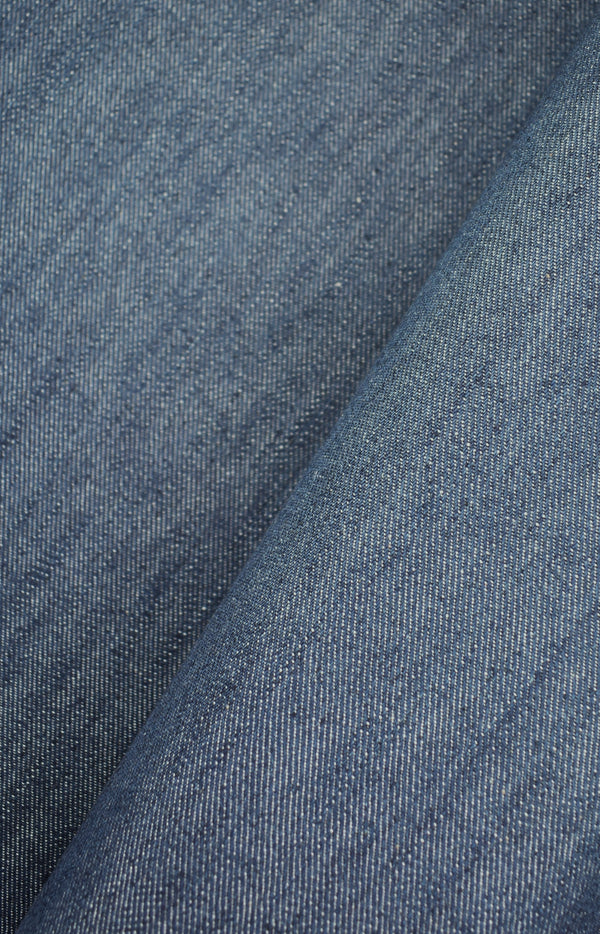
Gabardine fabric is a very tightly woven twill with a steep diagonal clearly visible on the face: dense, hard-wearing and with a clean drape that holds a crease. It is made in worsted wool, cotton or synthetics, and it is the classic fabric for trench coats, raincoats, uniforms and tailored trousers.
This guide to gabardine fabric is written for tailors, designers and brands: what it is, where it comes from, how it differs from twill, the types by fibre, how to choose and handle it, and where to find it among Zerow's deadstock fabrics, surplus from Italian luxury houses and mills.
What is gabardine fabric?
Gabardine is a woven fabric in a twill weave, meaning a diagonal weave. Compared with an ordinary twill it has many more warp than weft yarns, tightly twisted and closely packed: that is why the diagonal is steep, the fabric is dense and the surface is smooth and dry to the touch. The back is flatter and less marked than the face.
For the basics of weaves, read our guide to the types of fabric.
Where gabardine comes from
Modern gabardine was developed in England at the end of the nineteenth century by Thomas Burberry, who created a very dense twill treated to repel water while still breathing. It became the fabric of outdoor overcoats and then of the trench coats worn by officers in the First World War; from there it moved into civilian and tailored clothing.
Gabardine vs twill: the differences
All gabardine is twill, but not all twill is gabardine. Twill is the name of the diagonal weave, which covers very different fabrics, from denim to silk twill; gabardine is one specific twill, denser and steeper.
| Gabardine | Ordinary twill | |
|---|---|---|
| What it is | A specific fabric in a twill weave | The diagonal weave in general |
| Diagonal | Steep and fine, very regular | Usually closer to 45 degrees, more or less marked |
| Density | Very dense, warp-dominant | Varies, from light to heavy |
| Handle | Smooth, dry, firm | From soft to structured |
| Crease | Holds it very well | Depends on fibre and weight |
| Typical uses | Trench coats, uniforms, tailored trousers | Chinos, denim, jackets, shirts, linings |
Which to choose? Gabardine when you need a formal look, a sharp crease and resistance to the elements; a softer twill for casual pieces, chinos and shirts.
Types of gabardine fabric
| Gabardine | Properties | Typical uses |
|---|---|---|
| Worsted wool | Elegant, holds a crease, regulates temperature | Trousers, suits, jackets |
| Cotton | Sturdy, easy to wash | Trench coats, chinos, workwear |
| Synthetic or blend | Crease-resistant, often water-repellent | Raincoats, outerwear, uniforms |
| Stretch | With elastane, more comfortable to move in | Slim trousers, all-day pieces |


Gabardine fabric properties: pros and cons
| Pros | Cons |
|---|---|
| Very hard-wearing | Can turn shiny where it rubs |
| Holds its crease and shape | The dense surface shows pressing marks |
| Blocks wind and, if treated, water | Breathes less than a light plain weave |
| Elegant, with a clean drape | Poor seams stay visible |
What gabardine is used for
| Garment | Suitable gabardine |
|---|---|
| Trench coats and raincoats | Water-repellent cotton or synthetic |
| Tailored trousers | Worsted wool, including stretch |
| Suits and jackets | Worsted wool |
| Uniforms and workwear | Hard-wearing cotton or blend |
| Chinos and casual trousers | Cotton, brushed or stretch |
To pick the right cloth for each style of trousers, read our guide to trouser fabric.
Sewing and caring for gabardine
- Use a fine, new needle: the fabric is dense and a blunt needle leaves marks.
- Always press on the wrong side or with a pressing cloth, at a temperature suited to the fibre, so the surface does not turn shiny.
- Test your seams on an offcut first: on gabardine, every imperfection shows.
- Dry clean or hand wash wool; machine wash cotton at a low temperature; water-repellent finishes wear off with harsh washing.


Where to buy deadstock gabardine fabric
Zerow sells deadstock fabrics: surplus and end-of-run stock from Italian luxury houses and mills, already made and so requiring no new production. For makers, that means couture-grade quality in limited, often unrepeatable quantities: once a roll is gone, that fabric may not come back.
Fabrics are sold by the full roll. There is also a selection of fabrics cut to length, usually from a minimum of 10 metres: the details of each fabric, including how it is sold, are shown on the product page. Businesses with a VAT number have dedicated terms, and samples are available to everyone.
Gabardine fabric: frequently asked questions
What is the difference between gabardine and twill?
Twill is the diagonal weave in general; gabardine is one specific twill, much denser, with a steep, regular diagonal. That is why it is firmer and holds a crease better.
Is gabardine waterproof?
It is very dense and blocks wind; it becomes water-repellent when treated or made from synthetic fibres, as in trench coats and raincoats.
Is gabardine good for summer?
Light wool or cotton gabardine works in spring and autumn; for real heat, more open fabrics such as tropical wool or linen are cooler.
What is gabardine made of?
Traditionally worsted wool or cotton; today it is also made in synthetics and blends, often with a little elastane for comfort.
How do you iron gabardine?
On the wrong side or with a pressing cloth between iron and fabric, at a temperature suited to the fibre, to avoid a shiny surface.
Can I order a sample before buying?
Yes, samples are available to all Zerow customers, private and business. It is the best way to judge handle, weight and colour before ordering by the roll or cut to length.


