






Wool fabric: types, virgin wool and how to choose
A guide to wool fabric: properties, virgin wool under EU rules, worsted and woollen, the main types and how to work with them.

Wool fabric is made from the fleece of sheep, on its own or blended with other fibres. It is warm yet breathable, springy, crease-resistant and long-lasting, which is why it is the backbone of coats, jackets, suits and trousers. The range runs from light fresco, or tropical wool, for summer to wool cloth, boiled wool and melton for winter.
This guide is for tailors, designers and brands. It covers what wool is, its properties, what "virgin wool" really means, the difference between worsted and woollen, the main types of wool fabric, how to work with them and where to find them among Zerow's deadstock fabrics, surplus from Italian luxury houses and mills.
What is wool?
Wool is a natural animal fibre shorn from sheep. It is made of keratin, the same protein as hair and nails, and has a natural wave, called crimp, that traps air. In textiles the word also covers fibres from other animals, such as cashmere, mohair and alpaca, which have different properties and prices. Among sheep's wools, merino is the finest.
Properties of wool fabric
- It insulates thanks to the air held between the fibres, yet it breathes.
- It absorbs moisture without feeling wet.
- It is springy: creases drop out on their own, especially when the garment is hung.
- It is strong and long-lasting, and it tailors beautifully.
- Heat, water and friction can felt it, so it needs care.
Virgin wool: what it really means
"Virgin wool" does not mean a finer grade; it describes where the fibre comes from. The EU textile labelling regulation, summarised on EUR-Lex, allows the term only for wool never previously used in a finished product, so not recycled or reprocessed. In blends, "virgin wool" may be stated if it makes up at least 25% of the weight and all the wool in the fabric meets the definition. "Pure virgin wool" means a fabric made of virgin wool only.
Worsted and woollen
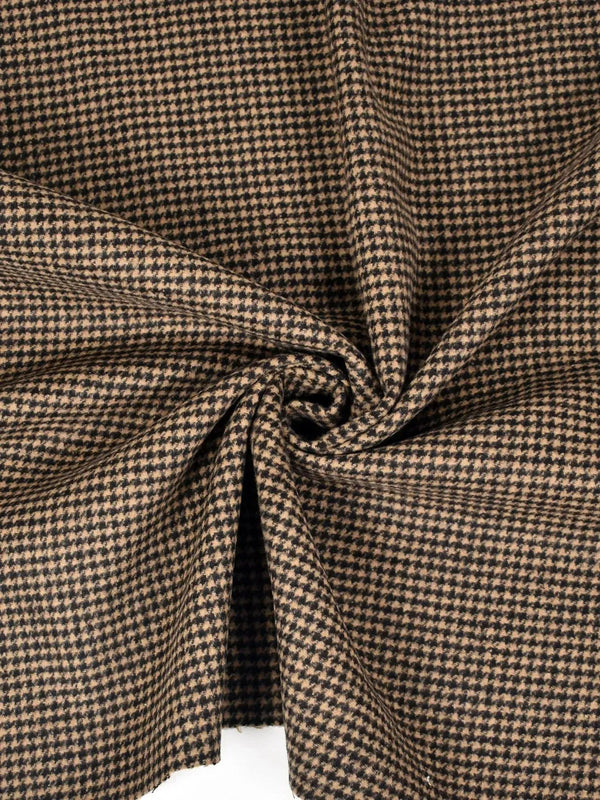
The difference lies in the spinning. Worsted uses long fibres combed parallel: the yarn is smooth and fine, giving crisp, compact cloths such as fresco, gabardine and pinstripes. Woollen also uses shorter fibres that are only carded: the yarn is bulkier, giving soft, warm, slightly hairy cloths such as flannel, tweed and coating. As a rule, worsted is for suits and woollen for outerwear.
Types of wool fabric
| Fabric | Character | Typical uses |
|---|---|---|
| Fresco (tropical wool) | Light, open worsted, cool | Suits and trousers for spring and summer |
| Wool gabardine | Compact twill, smooth and hard-wearing | Trousers, suits, raincoats |
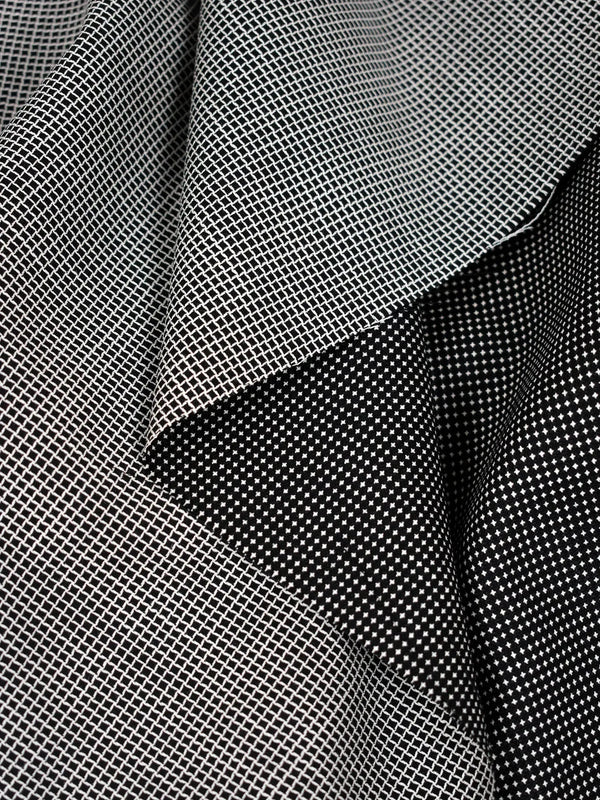
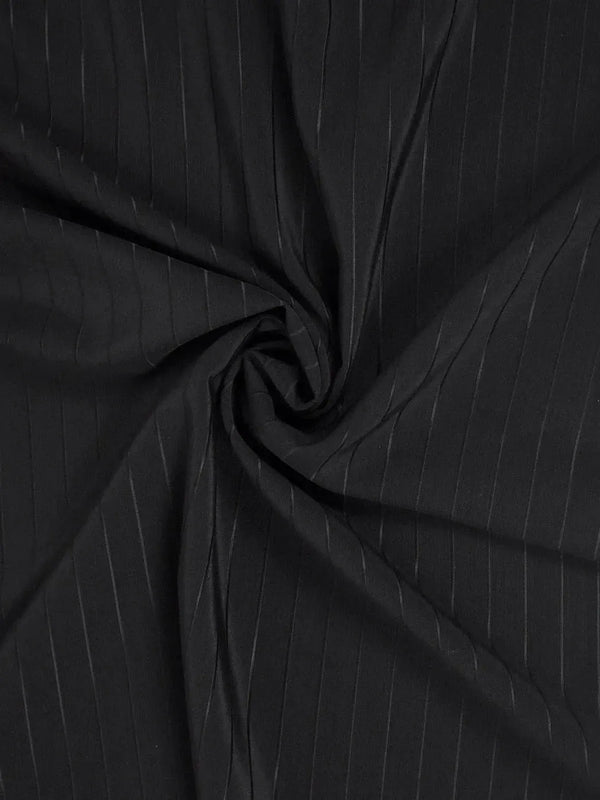
| Suiting and pinstripe | Worsted suiting cloths | Formal suits and jackets |
| Flannel | Woollen, soft and slightly brushed | Winter trousers and suits |
| Wool cloth | Dense, milled, closed surface | Coats and jackets |
| Melton | Very dense, heavy, windproof cloth | Coats, peacoats, outerwear |
| Boiled wool and felt | Felted, can be cut raw without fraying | Capes, unstructured jackets, accessories |
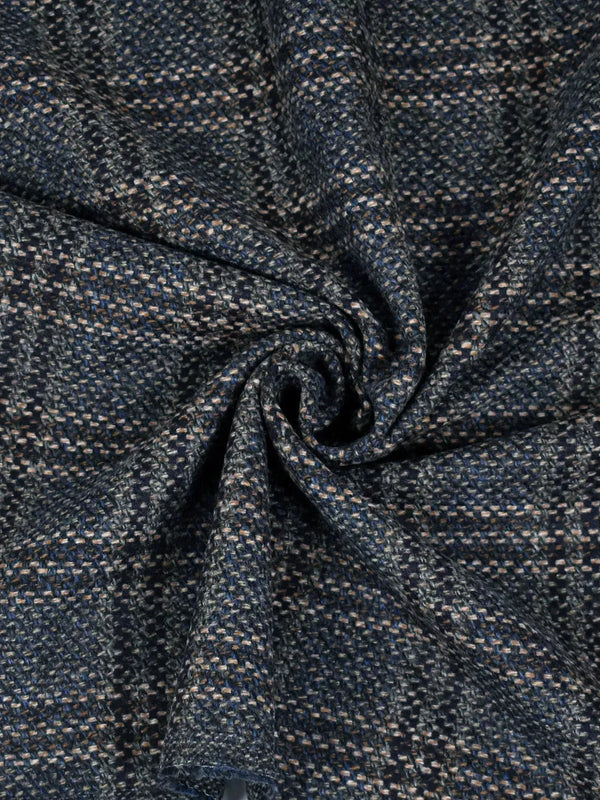
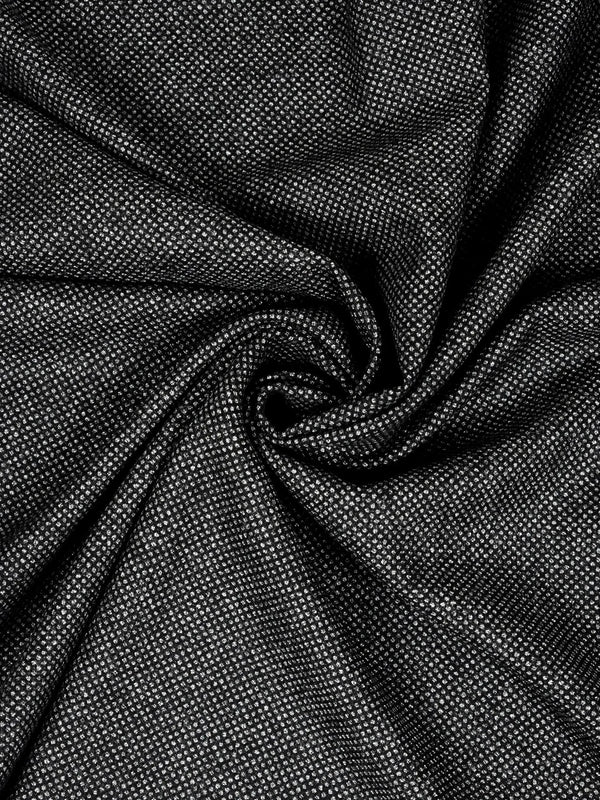
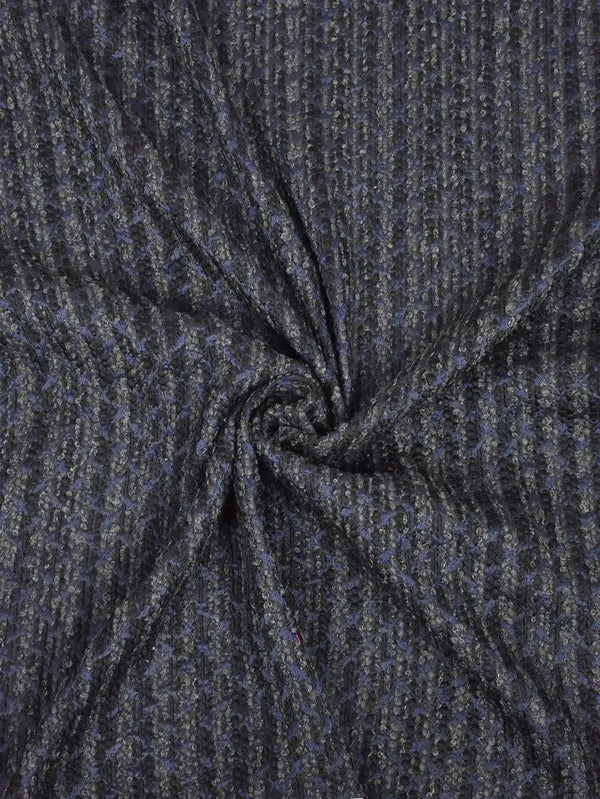
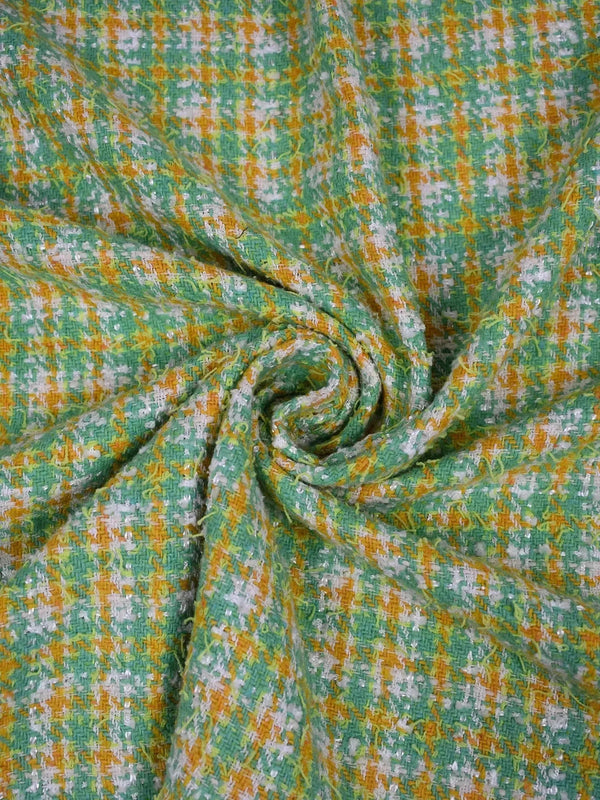
| Tweed | Woollen, rustic and mélange | Jackets, skirts, coats |
| Wool jersey and knit | Stretchy and soft | Knit dresses, tops, cardigans |
| Cashmere, mohair, alpaca blends | Softer or hairier | Coats and luxury pieces |
For more on some of these cloths, read our guides to fresco wool, gabardine and tweed.


Pure wool or wool blend
Pure wool gives the most warmth, breathability and shape retention. Blends add something specific: polyamide or polyester improve abrasion resistance and lower the price, elastane adds comfort to trousers, viscose makes the cloth more fluid and cashmere makes it softer. For a coat that lasts, choose a high wool content; for stretch trousers or workwear, a well-made wool blend is often more practical.
What wool is used for
- Coats and outerwear in wool cloth, melton, boiled wool and tweed.
- Suits, jackets and tailoring in fresco, gabardine and pinstripe.
- Trousers and skirts: see our guide to trouser fabric.
- Dresses and tops in wool jersey or knit.
- Accessories such as hats, scarves and bags in felt or boiled wool.
Sewing, pressing and washing wool
- Pre-shrink the cloth with a steam iron before cutting, so it will not shrink later.
- Cut all pieces in the same direction, especially on flannel, wool cloth and napped fabrics.
- Use an 80/12 or 90/14 needle for worsteds and 90/14 or 100/16 for heavy coating.
- Press with steam and a pressing cloth: wool pressed directly turns shiny.
- Hand-wash in cold water or dry-clean, without rubbing or spinning: heat and friction felt it.


Buying deadstock wool fabric
Zerow sells deadstock wool: surplus and end-of-run cloth from Italian luxury houses and mills, already made and so needing no new production. For makers, that means couture-grade quality in limited, often unrepeatable quantities. Once a roll is gone, that wool may not come back.
Fabrics are sold by the full roll. There is also a selection of fabrics cut to length, usually from a minimum of 10 metres: the details of each fabric, including composition and how it is sold, are on the product page. Businesses with a VAT number have dedicated terms, and samples are available to everyone.
Our wool fabric collection includes pure virgin wool and blends: fresco, gabardine, flannel, wool cloth, melton, felt, tweed and knits. For fibres and weaves, read our guide to the types of fabric.
Wool fabric FAQs
What is the difference between wool and virgin wool?
Virgin wool has never been used in a finished product, so it is not recycled. It is not necessarily finer: the term describes where the fibre comes from, not its quality.
Boiled wool or wool cloth?
Boiled wool is felted and soft and can be cut raw without hemming; wool cloth is more compact and structured. Choose boiled wool for unstructured pieces and wool cloth for tailored coats.
Is wool itchy?
It depends on fibre fineness: fine wools such as merino and cashmere blends are soft, while coarser woollens can prickle on bare skin.
Can wool fabric go in the washing machine?
Usually not, unless stated: heat and spinning make it felt and shrink. Hand-wash in cold water or dry-clean.
Can I order a sample before buying?
Yes, samples are available to all Zerow customers, private and business. It is the best way to judge handle, weight and colour before ordering by the roll or cut to length.


