






Velvet fabric: types, corduroy and velvet vs chenille
A guide to velvet fabric: how it is made, fibres, types, corduroy, the difference from chenille and how to sew and press it.

Velvet fabric has a short, dense pile cut on one side, which makes it soft to the touch and gives colour depth and sheen. It can be cotton, silk, viscose or polyester, plain or ribbed, firm or stretch. It is used for jackets, trousers, evening wear and upholstery, especially in autumn and winter.
This guide is for tailors, designers and brands. It covers what velvet is and how it is made, what it is made of, the main types, corduroy, how velvet differs from chenille, how to sew it and where to find it among Zerow's deadstock fabrics, surplus from Italian luxury houses and mills.
What is velvet fabric and how is it made?
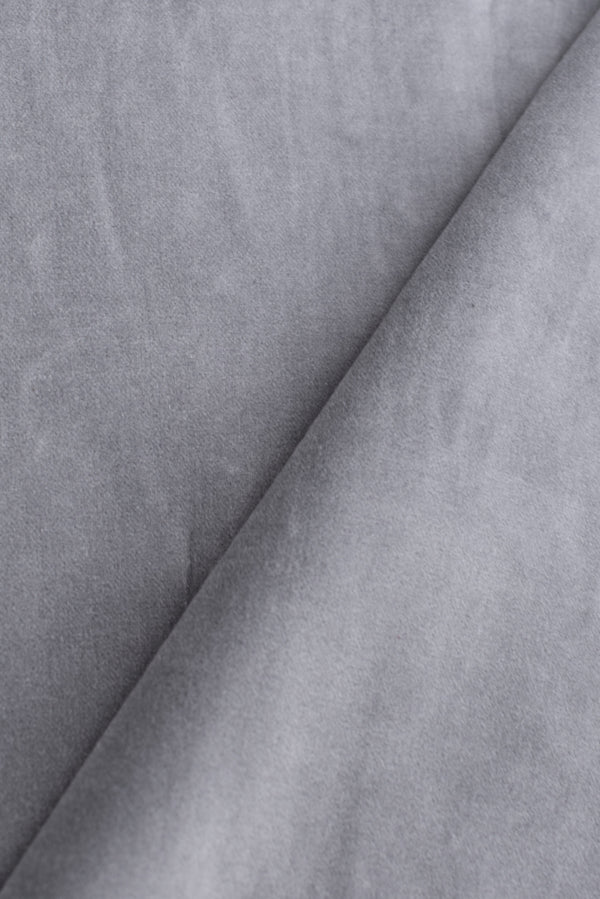
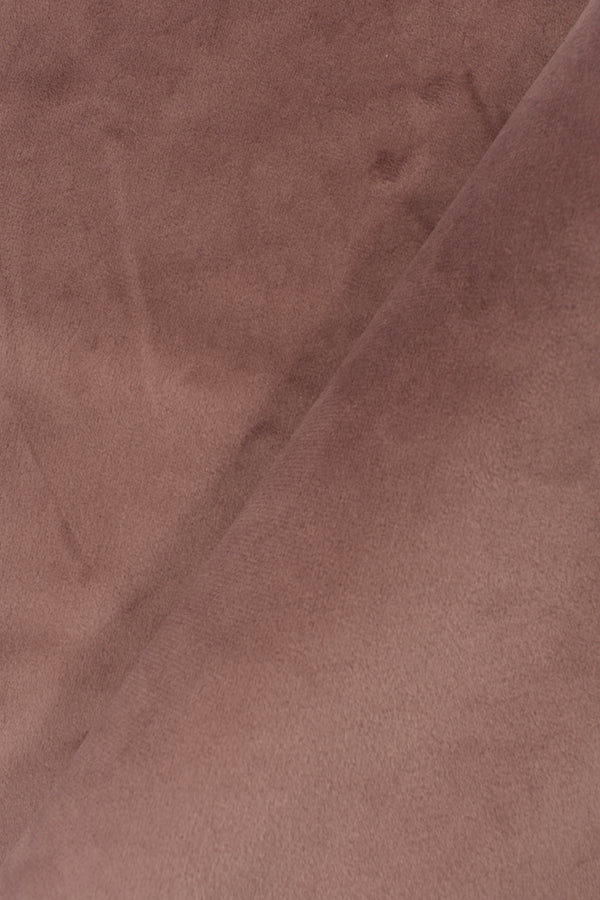
Velvet is a pile fabric: on top of the ground warp and weft, an extra yarn forms the pile on the surface. The classic method is double cloth: two fabrics are woven face to face, joined by long pile yarns, and a blade cuts them apart, as Britannica explains. That produces two lengths of velvet at once.
The pile has a direction: stroked one way it is smooth and lustrous, the other way rougher and darker. That gives velvet its shading, and it is the key thing to remember when cutting.
What velvet is made of
Velvet describes the construction, not the fibre. Silk velvet is the oldest and most precious, fluid and lustrous. Cotton velvet is the most common for clothing: matt, durable and breathable. Viscose velvet has a soft hand and lovely drape, close to silk. Polyester velvet is affordable, hard-wearing and easy care, and widely used for upholstery. A little elastane turns any of them into stretch velvet.
Types of velvet fabric
| Type | Character | Typical uses |
|---|---|---|
| Plain velvet | Short, even pile | Jackets, dresses, accessories |
| Corduroy | Pile arranged in raised ribs | Trousers, jackets, overshirts |
| Stretch velvet | With elastane, follows the body | Slim trousers, dresses |
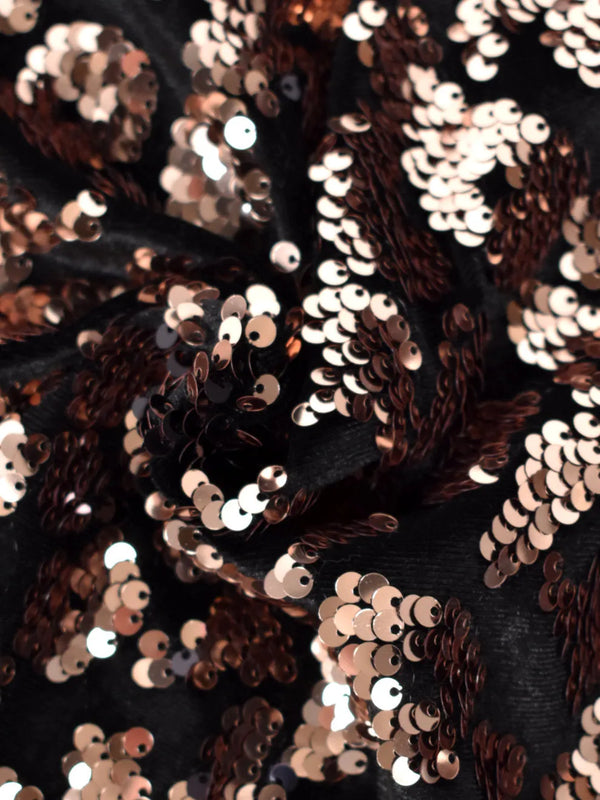
| Devoré velvet | Pile partly burnt out to form sheer patterns | Evening dresses, wraps |
| Printed velvet | Designs printed on the pile | Dresses, cushions, upholstery |
| Upholstery velvet | Heavier, abrasion-resistant | Sofas, armchairs, curtains |
| Velour | Pile on a knitted base, stretchy | Loungewear, tracksuits |


Corduroy
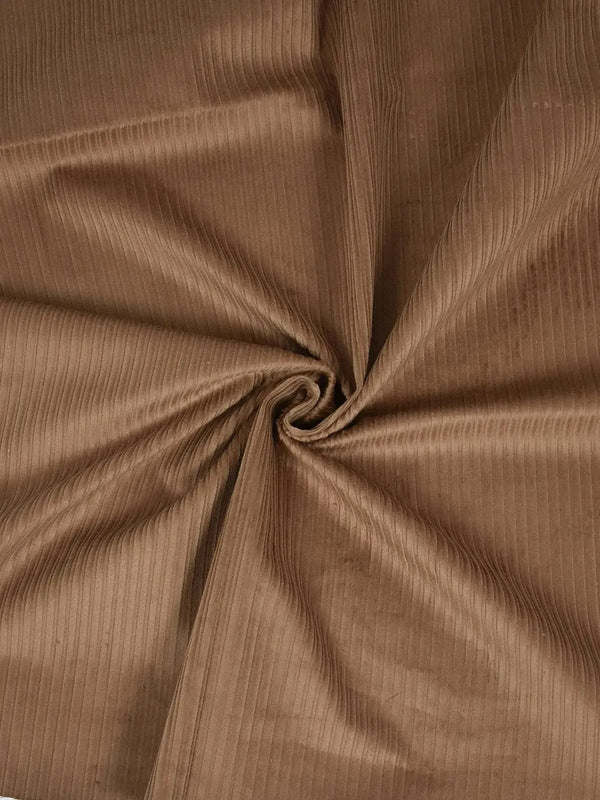
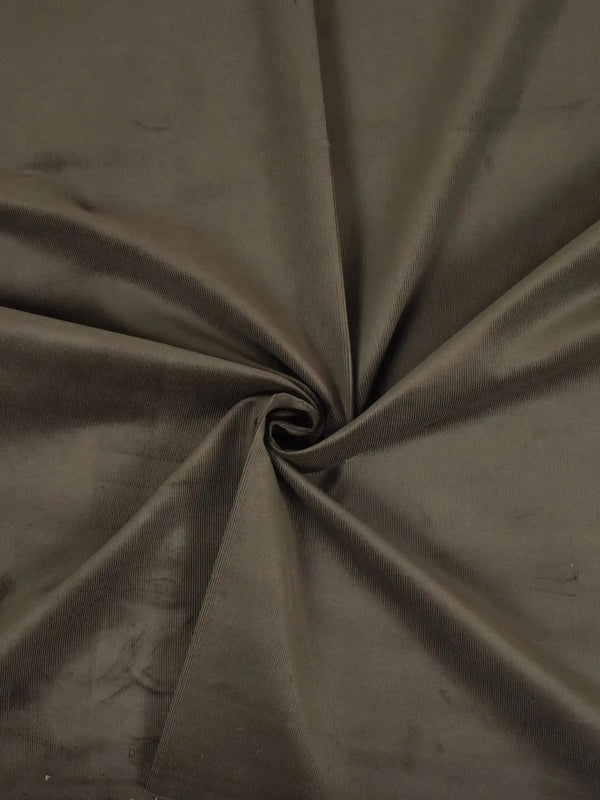
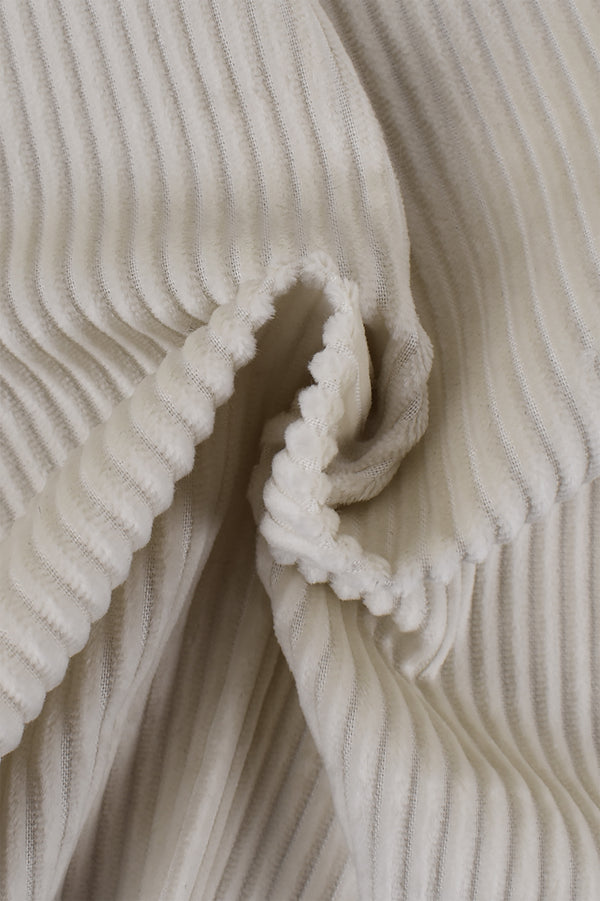
In corduroy the pile does not cover the whole surface but forms raised ribs, or wales, running along the warp. Wales can be fine, as in needlecord, medium or wide: the wider they are, the warmer and more casual the cloth. Corduroy is almost always cotton, sometimes with elastane, and it is the classic velvet for trousers, jackets and overshirts. Compared with plain velvet it stands up better to daily wear and is easier to press.
Velvet vs chenille: the differences
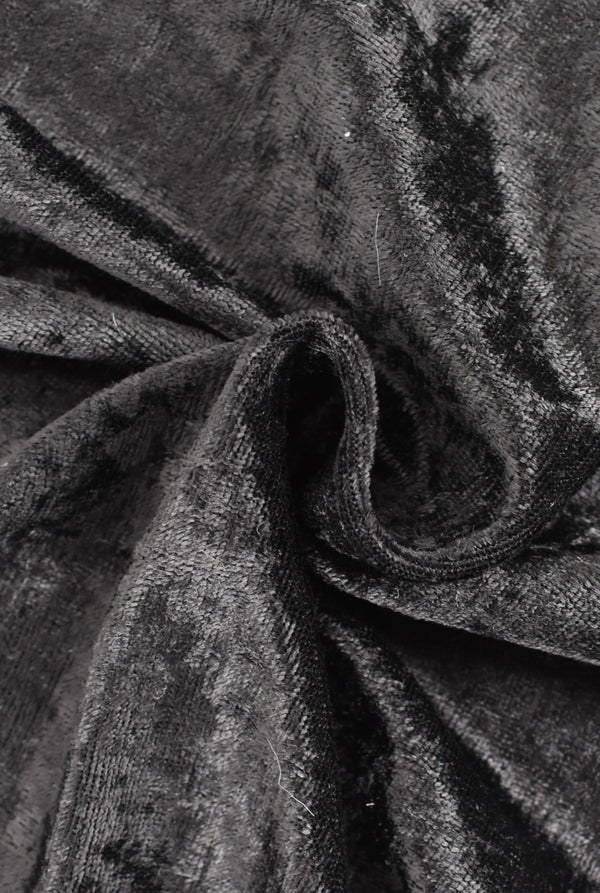
Chenille is often confused with velvet because it is also soft and plush. The difference is in the yarn: chenille uses a special yarn with short cut fibres twisted around a core, like a caterpillar. The pile is in the yarn, not in the structure of the fabric.
| Feature | Velvet | Chenille |
|---|---|---|
| Where the pile comes from | The weave, cut on the surface | The yarn, which is already fuzzy |
| Surface | Short, dense, even pile | More irregular and bulky |
| Look | Lustrous, with shading | More matt and soft |
| Weight | Light to heavy | Usually heavier and plusher |
| Uses | Clothing, eveningwear, upholstery | Knitwear, throws, cushions, sofas |
In short, choose velvet for a tailored piece with sheen and clean drape, and chenille for a cosy, casual feel or for upholstery. You will find both in our velvet and chenille collections.
Is velvet fabric only for winter?
It is mainly a cold-weather fabric: the pile traps air, so velvet is warm and a classic for autumn and winter. But it is not only for winter. Light viscose or silk velvets work for evening wear all year round, and fine cotton needlecord suits spring and autumn. Wide-wale corduroy and heavy velvets are firmly cold-weather cloths.
What velvet fabric is used for
- Trousers and jackets, especially in corduroy: see our guide to trouser fabric.
- Evening dresses, blazers and occasion suits in plain velvet.
- Skirts, dresses and fitted tops in stretch velvet.
- Bags, hats and accessories.
- Sofas, armchairs, cushions and curtains in upholstery velvet.
Sewing, pressing and washing velvet
- Cut every piece with the pile running the same way, or the colour will look different from piece to piece.
- Pin only in the seam allowances and baste: velvet creeps while you sew.
- Use a walking foot, an 80/12 or 90/14 needle and a slightly longer stitch.
- Press from the wrong side with steam, without resting the iron, or on a velvet board, so you do not crush the pile.
- Follow the care label: cotton velvet often takes a cool machine wash, while silk and viscose velvet should be dry-cleaned.


Buying deadstock velvet fabric
Zerow sells deadstock velvet: surplus and end-of-run cloth from Italian luxury houses and mills, already made and so needing no new production. For makers, that means couture-grade quality in limited, often unrepeatable quantities. Once a roll is gone, that velvet may not come back.
Fabrics are sold by the full roll. There is also a selection of fabrics cut to length, usually from a minimum of 10 metres: the details of each fabric, including composition and how it is sold, are on the product page. Businesses with a VAT number have dedicated terms, and samples are available to everyone.
Our velvet fabric collection includes plain velvet and cotton corduroy, stretch, printed and upholstery velvets. For fibres and weaves, read our guide to the types of fabric.
Velvet fabric FAQs
Is velvet cotton?
Not always. Velvet describes the pile construction, not the fibre: there is cotton, silk, viscose and synthetic velvet. Corduroy is almost always cotton.
What is the difference between velvet and velour?
Velvet is woven, with a short, dense pile; velour has its pile on a knitted base, so it is stretchier and more casual.
Can velvet go in the washing machine?
It depends on the fibre: cotton velvet often can, cool and inside out; silk and viscose velvet are best dry-cleaned. Always check the label.
Plain velvet or corduroy for trousers?
Corduroy is tougher and better for everyday wear; plain velvet is dressier and more delicate. For comfortable trousers there is also stretch velvet.
Can I order a sample before buying?
Yes, samples are available to all Zerow customers, private and business. It is the best way to judge handle, weight and pile direction before ordering by the roll or cut to length.


