






Cuoio vs pelle: Italian leather terms, cuoio leather and soft leather
Cuoio vs pelle: what cuoio leather is, how it differs from soft leather, vegetable tanning, types of cuoio, when to use each and how to work it.

In Italian leather, cuoio and pelle are two different words. Cuoio leather is thick, dense and firm, usually cowhide and often vegetable-tanned: the material of soles, belts and saddlery. Pelle is the general word for any tanned skin and, in everyday use, means softer, thinner leathers such as lamb, goat or nappa. So cuoio is leather too: the difference lies in thickness, handle and use.
This guide is for leather goods makers, shoemakers, designers and brands sourcing Italian leather. It covers what cuoio is, how it differs from soft leather, its link with vegetable tanning, the main types, when to choose each one, how to work and care for it, and where to find it among Zerow's deadstock leathers.
What is cuoio leather?
Cuoio comes from thick hides, mainly adult cattle (cow, bull, steer), tanned to stay firm and strong. It is the leather of soles, belts, saddlery and structured leather goods: Britannica likewise distinguishes heavy leathers, for soles and harness, from light leathers for clothing and accessories.
Thickness usually runs from 1.5 to over 4 mm. The best part of the hide is often used, the butt or bend along the back, where the fibres are densest and most even. In English, cuoio is simply leather, or more specifically saddlery leather, vegetable-tanned leather or, for soles, sole leather.
Cuoio vs pelle: the differences
| Feature | Cuoio | Pelle (soft leather) |
|---|---|---|
| Animal | Usually adult cattle | Calf, lamb, goat, sheep, also cattle |
| Thickness | High, 1.5 to over 4 mm | Low to medium, 0.5 to 1.5 mm |
| Tanning | Often vegetable | Often chrome, also vegetable |
| Handle | Firm, dense, stiff | Soft, supple, drapey |
| Uses | Soles, belts, saddlery, structured bags | Clothing, gloves, soft bags, linings |
| Ageing | Darkens and develops a patina | Depends on the finish |
For an overview of all leathers, read our guide to the types of leather.
Cuoio and vegetable tanning
Much cuoio is vegetable-tanned, with tannins from barks and woods such as chestnut, quebracho and mimosa: the traditional tanning of many Italian tanneries. The result is a firm, fragrant leather that can be cut with raw edges, tooled and embossed, and that darkens over time into a warm patina. That is where the Italian colour name "cuoio" comes from: the warm, natural tan of undyed veg-tan leather.
There is also metal-free cuoio, tanned without chrome, with a similar handle.
Types of cuoio
- Butt (groppone): the central, finest part of the hide, dense and even.
- Vacchetta: vegetable-tanned cowhide, smooth or milled, widely used in leather goods.
- Calf cuoio: finer and more even, for footwear and small leather goods.
- Bull cuoio: strong fibre and a marked grain.
- Sole leather: the thickest and stiffest, for shoe soles.
More on calf in our guide to calfskin leather.


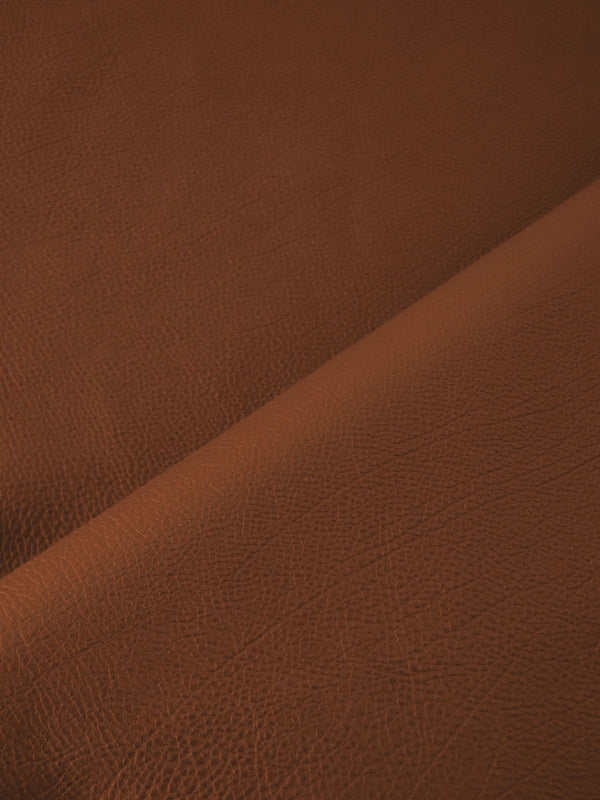
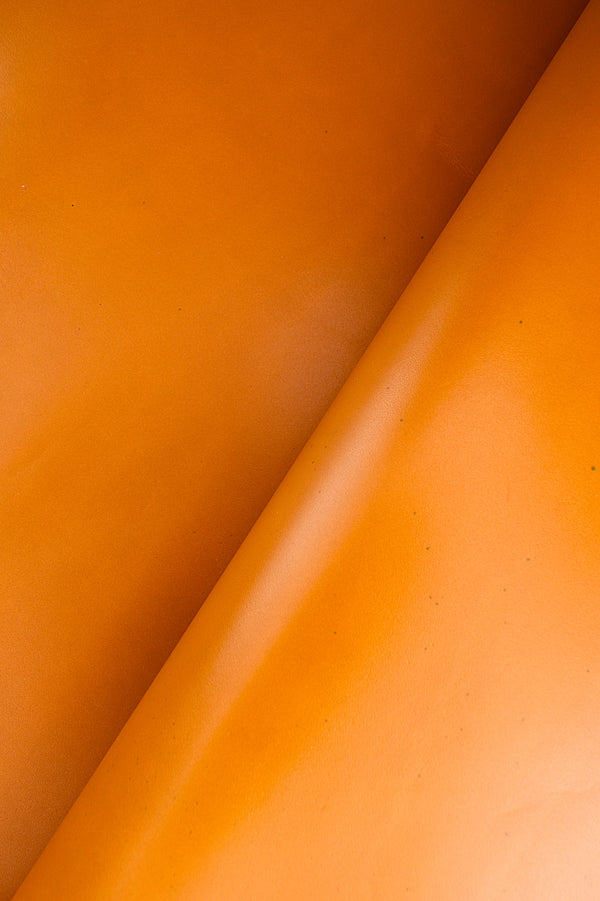
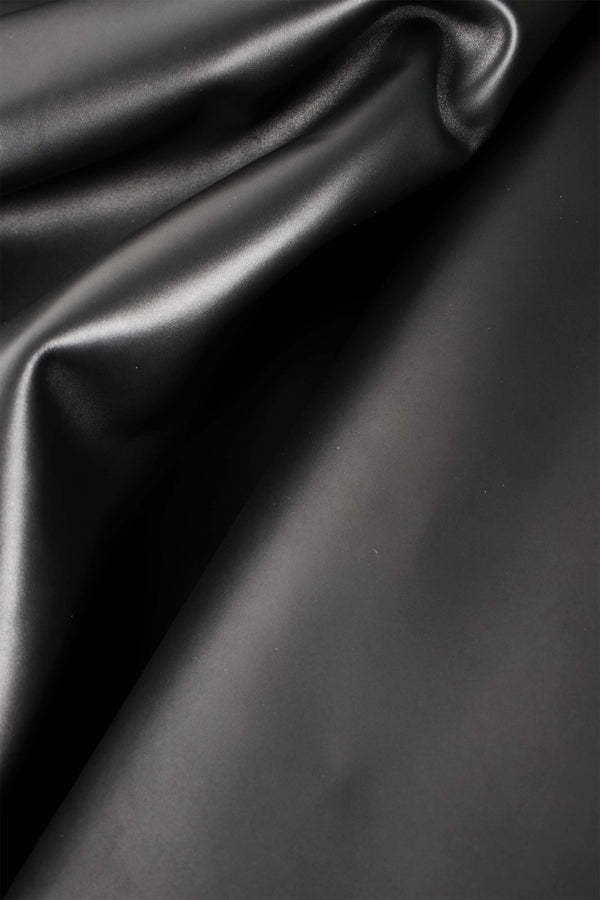

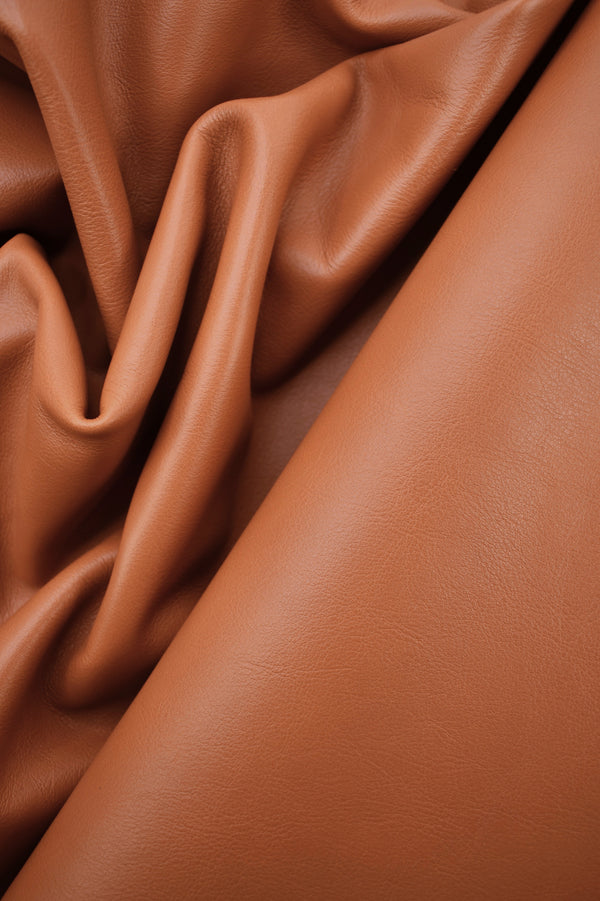

Cuoio or soft leather: when to use each
- Choose cuoio for belts, soles, saddlery, structured bags and wallets, straps and objects that must hold their shape.
- Choose soft leather for clothing, gloves, slouchy bags, linings and pieces that need to drape and move.
- For a bag you can combine them: cuoio for handles and base, soft leather for the body.
- If you want a natural look that ages well, go for cuoio and veg-tan leathers; if you need softness and stable colours, choose chrome-tanned leathers.
For surface quality, see also our guide to full grain leather.


How to work and care for cuoio
- Cut with a very sharp knife on a hard surface, in one firm pass.
- Bevel and burnish the edges: veg-tan cuoio is ideal for raw edges finished with water or edge products.
- Punch with pricking irons or hole punches and saddle-stitch by hand, or use machines for heavy leather.
- Condition with a suitable cream or dressing, without overdoing it.
- Keep unfinished cuoio away from water and direct sun: it marks and darkens quickly.
Where to buy deadstock cuoio and leather
Zerow sells deadstock cuoio leather and soft leathers: surplus and end-of-run skins from Italian luxury houses and tanneries, already made and so needing no new production. Quantities are limited and variants are rarely repeated: once a skin is gone, it may not come back.
Leathers are sold by the skin, so you choose how many skins you need. Each product page shows the average m² per skin, the thickness and the other specifications. Businesses with a VAT number have dedicated terms, and samples are available to everyone.
Our saddlery leather collection includes butts, smooth calf, metal-free cuoio and bull cuoio; our vegetable-tanned leather collection has vacchetta and soft lamb, sheep, goat and sheepskin leathers.
Cuoio vs pelle FAQs
Are cuoio and pelle the same thing?
Cuoio is a type of pelle: leather tanned to be thick, firm and stiff, usually cowhide. In everyday Italian, pelle mostly refers to thin, soft leathers.
What is cuoio in English?
Usually just leather. To be more specific, English uses saddlery leather, vegetable-tanned leather or, for soles, sole leather.
What is vacchetta leather?
Vegetable-tanned cowhide, smooth or milled. It is widely used for bags, belts and small leather goods because it is strong and ages well.
What colour is cuoio?
As a colour, cuoio is the warm, orange-brown tan of undyed vegetable-tanned leather, which darkens over time.
Can I order a sample before buying?
Yes, samples are available to all Zerow customers, private and business, leathers included. It is the best way to judge thickness, handle and colour in person.


