






Embossed, Tumbled and Hammered Leather: Differences and How to Choose
A guide to embossed, tumbled and hammered leather: how each finish is made, how to tell them apart and which one to choose for bags, shoes and small leather goods.

Embossed leather, tumbled leather and hammered leather are three ways of giving a hide surface character. Tumbling works on the natural grain and brings it out irregularly. Embossing presses a precise, repeatable pattern into the grain. Hammered leather has a beaten-metal look, and it is almost always made by embossing too.
This guide is for leather goods makers, shoemakers, designers and brands. It explains how each finish is made and how to tell them apart. It also covers which one to choose for each product and what you will find among Zerow's deadstock leathers.
What is tumbled leather?
Tumbled leather, also called milled leather, is turned dry for several hours in a large rotating drum. The constant movement softens the fibres. It also brings out the natural grain, which crinkles and becomes more visible. No two hides look exactly the same.
The result is a soft, full-bodied leather that hides small marks and resists scratches well. That is why it is popular for soft bags, small leather goods and footwear. When the grain is very crinkled, it is sometimes sold as shrunken grain.


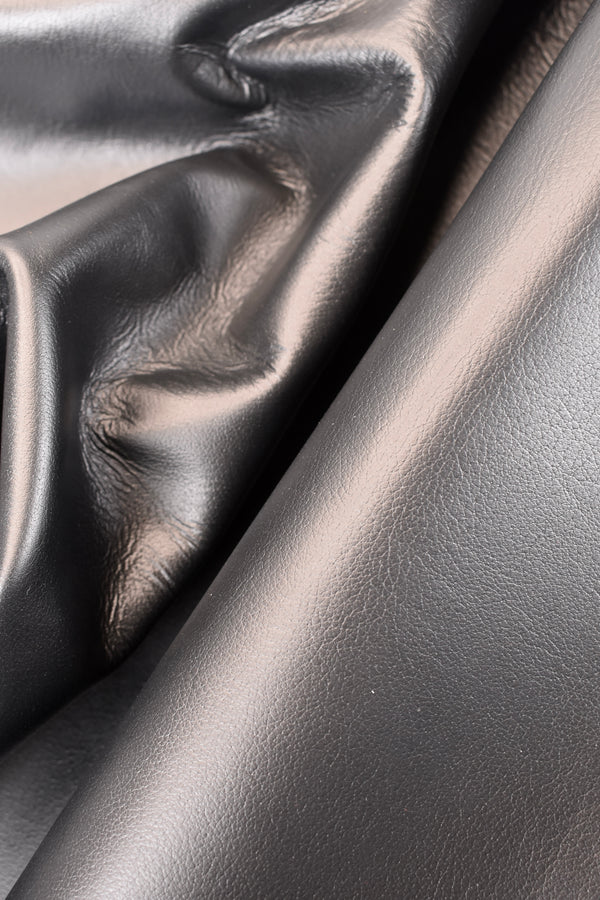


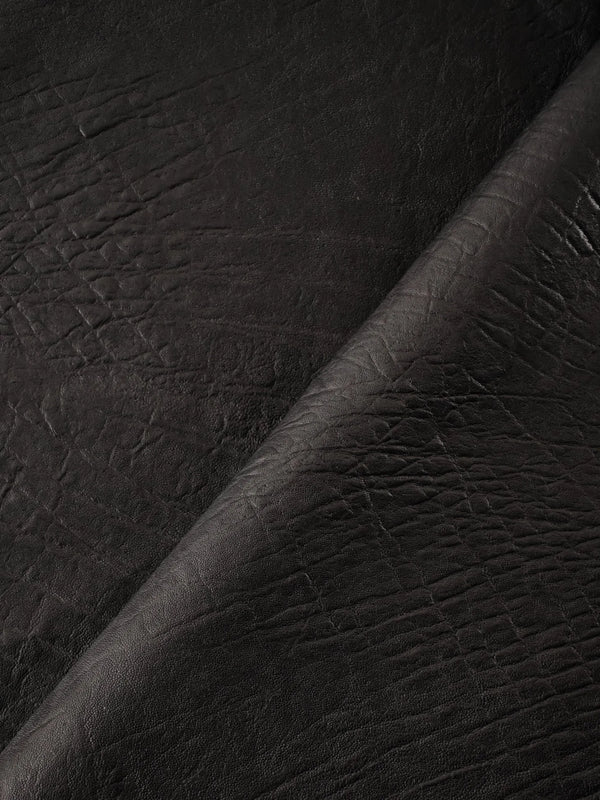
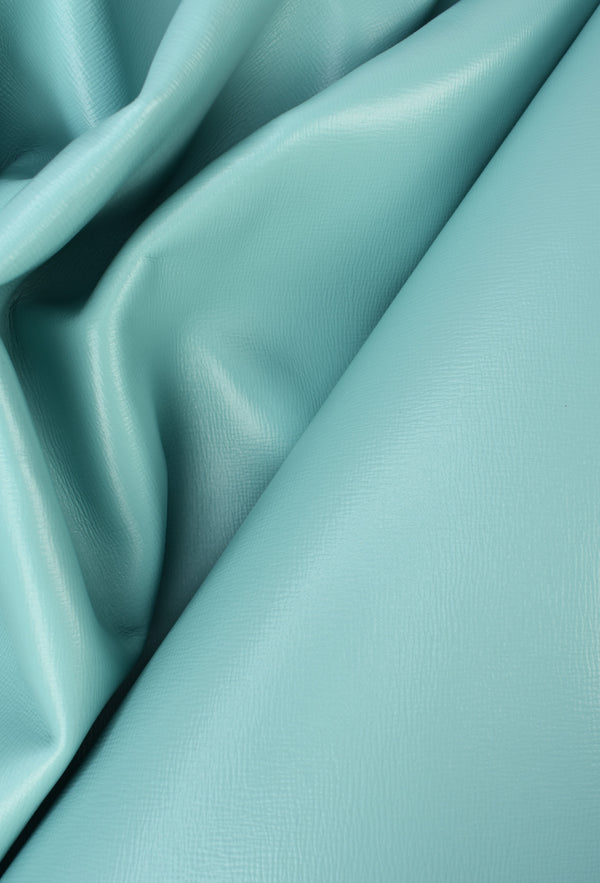
What is embossed leather?
Embossed leather, often called printed leather, is made with a press and an engraved plate. Heat and pressure transfer the pattern onto the grain. This can reproduce many looks, from croc and ostrich to saffiano, pigprint and the round grain known as dollar grain. The pattern stays even across the hide and from one hide to the next.
Embossing makes the surface firmer and more uniform. It also improves hides with an uneven grain, which makes them ideal for production runs that need a consistent look. Pony hair can be printed too, but there the print sits on the hair, not the grain. Our guide to pony hair leather explains the difference.
What is hammered leather?
Hammered leather has small, irregular dents that look like metal shaped with a hammer. The effect usually comes from a dedicated embossing plate. Sometimes light tumbling follows to soften it. Technically, then, hammered leather is a type of embossed leather.


Tumbled, embossed and hammered leather compared
| Tumbled | Embossed | Hammered | |
|---|---|---|---|
| How it is made | Dry rotation in a drum | Press with an engraved plate | Hammered plate, sometimes with tumbling |
| Grain | Natural and irregular, different on every hide | Even, repeatable pattern | Small irregular dents |
| Handle | Soft and full | Firmer and more structured | From firm to soft |
| Wear marks | Hides them well | Depends on the pattern | Hides them well |
| Typical uses | Soft bags, small leather goods, shoes | Structured bags, belts, production runs | Bags, small leather goods, details |
Which one to choose
Choose tumbled leather for a soft, natural look that ages well and copes with daily use. It suits unstructured bags and small leather goods. Choose embossed leather when you need a precise, consistent look across many pieces, or a specific grain such as croc or saffiano on a structured bag. Hammered leather sits in between, with a lively surface and the regularity of a print.
Working and care
Tumbled leather cuts and sews without special precautions. Still, lay out your pieces with the grain variations across the hide in mind. With embossed leather, follow the direction of the pattern, especially on reptile prints, and check that adjoining pieces match.
For care, dust with a soft cloth and use a conditioner suited to the leather. Test it on a hidden spot first. Keep all three away from direct heat, which can flatten the grain or the embossed pattern.
Where to buy deadstock embossed and tumbled leather
Zerow sells deadstock leathers. These are surplus and end-of-run skins from Italian luxury houses and tanneries, so no new production is needed. Quantities are limited and individual variants are rarely repeated. Once a skin is sold, it may not come back.
Leathers are sold by the skin, so you choose how many skins you need. Each product page shows the average m² per skin, the thickness and the other specifications. Businesses with a VAT number have dedicated terms. Samples are available to everyone.
Shop embossed leather or tumbled leather
Embossed, tumbled and hammered leather: frequently asked questions
What is the difference between tumbled and embossed leather?
Tumbled leather gets its grain from rotating in a drum, which brings out the natural grain irregularly. Embossed leather gets a pattern pressed in by a plate, so it is even and repeatable.
Is milled leather the same as tumbled leather?
Yes. Both names describe the same process, where leather is turned dry in a drum to soften it and bring out the grain.
How is hammered leather made?
Almost always with an embossing plate that recreates the look of beaten metal. Sometimes light tumbling follows to soften the surface.
What is dollar grain?
It is a round, pronounced grain pressed into the leather. It is widely used for bags and small leather goods.
Is embossed leather lower quality?
Not necessarily. Embossing is a finish and can be applied to excellent hides. Always check the leather type, thickness and tannage on the product page.
Can I order a sample before buying?
Yes. Samples are available to all Zerow customers, private and business, and that includes leathers. A sample is the best way to judge grain, handle and colour in person.


