






Viscose Fabric: What It Is, Properties and How to Use It
A guide to viscose fabric: what it is, whether it is natural or synthetic, how it differs from rayon, modal and lyocell, the most common viscose fabrics and how to wash it without shrinking.

Viscose fabric is a man-made fabric: it starts from wood cellulose, a natural raw material, which is turned into yarn through a chemical process. So viscose is neither a natural fibre like cotton nor a synthetic like polyester. It is soft, cool, drapes beautifully and takes dye well; in return it is weak when wet and can shrink if washed carelessly.
This guide to viscose fabric is written for tailors, designers and brands: what viscose is, how it differs from rayon, modal and lyocell, which fabrics are made from it, how to sew and wash it, and where to find it among Zerow's deadstock fabrics, surplus from Italian luxury houses and mills.
What is viscose fabric: natural, man-made or synthetic?
Viscose is a man-made fibre, also called regenerated cellulose. It starts from cellulose extracted from wood (beech, eucalyptus or pine, for instance) or other plants, which is dissolved and then turned back into a solid filament. The result is chemically cellulose, like cotton, but its look and handle are decided by the maker: smooth and lustrous like silk, matt like cotton or textured like linen.
Because of its origin, viscose sits halfway: the raw material is natural, the fibre is made by people. That is why it is grouped with the man-made fibres, alongside modal, lyocell, cupro and acetate. For the full picture, read our guide to the types of fabric.
Viscose vs rayon, modal and lyocell
"Rayon" is the generic name used mainly in the United States for regenerated cellulose fibres; in Europe the legal label name is "viscose". So a garment sold in the US as rayon fabric is, in most cases, viscose. Modal and lyocell are close relatives with names of their own, because they come from different processes. The EU Regulation (EU) No 1007/2011 lists them as separate fibres.
| Fibre | How it is made | What changes in use |
|---|---|---|
| Viscose | Cellulose dissolved by the viscose process | Soft and fluid, weak when wet |
| Modal | A variant of the viscose process, from beech cellulose | Stronger when wet, widely used in jersey |
| Lyocell | Cellulose dissolved in a solvent recovered in a closed loop | Stronger, lower-impact process |
| Cupro | Cellulose from cotton linter | Smooth and slippery, a classic lining |
How viscose is made
Cellulose is treated with caustic soda and carbon disulphide until it forms a thick solution, the "viscose" that gives the fibre its name. The solution is forced through tiny holes into an acid bath, where it solidifies into filaments that are then washed, drawn and spun.
The process was patented in 1892 by the British chemists Charles Cross, Edward Bevan and Clayton Beadle, and industrial production began in England in 1905. The name "rayon" was adopted in the United States in 1924.
Viscose fabric properties: pros and cons
| Pros | Cons |
|---|---|
| Soft handle, often silk-like | Loses strength when wet |
| Fluid drape, ideal for garments that move | Can shrink in hot water and the tumble dryer |
| Cool and absorbent, comfortable in summer | Creases easily |
| Takes dye well, bright and even colours | Slips and frays when cut |
| Versatile: plain weave, satin, crêpe, jersey | Not stretchy without elastane |
Is viscose breathable? Yes: it absorbs moisture better than polyester, which is why it is popular for summer clothing. Compared with cotton it drapes more softly but needs more care when washing.
The most common viscose fabrics
The same fibre becomes very different fabrics depending on how it is made:
- Crêpe: grainy surface and soft drape, for dresses, blouses and fluid trousers.
- Chiffon and georgette: light and sheer, for shirts, evening wear and layering.
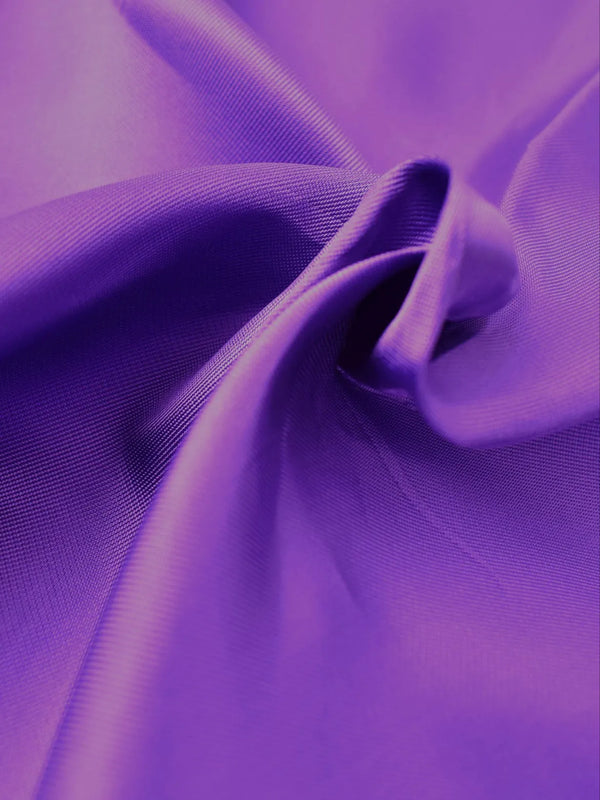
- Satin: lustrous and slippery, a more accessible alternative to silk satin.
- Jersey: soft knit, often with elastane, for T-shirts, tops and fitted dresses.
- Twill and cady: more structured, for trousers and suits with a soft drape.
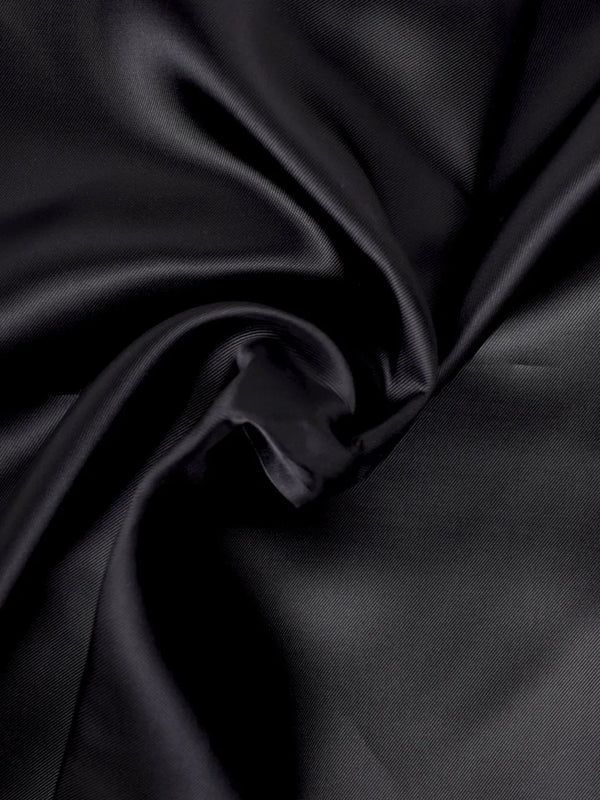
- Linings: viscose and cupro are among the most used linings for jackets and coats, because they breathe and glide.




How to spot good viscose
When you assess a sample, look and touch:
- the handle: smooth and even, with no rough patches;
- the drape: laid over your hand, the fabric should fall softly, without stiffness;
- the colour: uniform, with no streaks or lighter areas;
- the composition label: "viscose", "modal" and "lyocell" behave differently, especially in the wash.
Sewing and washing viscose fabric
Lightweight viscose slips and frays: cut it on a table with tissue paper underneath or use weights instead of pins, choose a fine needle and finish the seam allowances straight away. If the garment will be washed, pre-wash the fabric before cutting so any shrinkage happens first.
To wash: cold or lukewarm water, a gentle detergent, no wringing and no tumble dryer. Dry flat or hanging in the shade and press at a medium setting, ideally on the wrong side. For structured or lined garments, dry cleaning is often the better choice. Always follow the fabric's care label.
Is viscose fabric sustainable?
Viscose comes from a renewable source and, being cellulose, biodegrades more readily than synthetics. The production process, however, uses chemicals such as carbon disulphide that must be properly managed and recovered. Lyocell, with its solvent recovered in a closed loop, is the cleaner variant.
A practical way to cut the impact is to use viscose that already exists: deadstock fabrics are existing surplus that requires no new production.


Where to buy deadstock viscose fabric
Zerow sells deadstock fabrics: surplus and end-of-run stock from Italian luxury houses and mills, already made and so requiring no new production. For makers, that means couture-grade quality in limited, often unrepeatable quantities: once a roll is gone, that fabric may not come back.
Fabrics are sold by the full roll. There is also a selection of fabrics cut to length, usually from a minimum of 10 metres: the details of each fabric, including how it is sold, are shown on the product page. Businesses with a VAT number have dedicated terms, and samples are available to everyone.
Viscose fabric: frequently asked questions
Is viscose a natural fabric?
No. Viscose is a man-made fibre: it starts from wood cellulose, which is natural, but the fibre is produced by a chemical process. It is not synthetic either, because it does not come from oil.
Is viscose the same as rayon?
In practice, yes: "rayon" is the generic name used mainly in the United States for regenerated cellulose fibres, while "viscose" is the name used in Europe and on labels. Modal and lyocell are related fibres with their own names and processes.
Does viscose shrink?
It can shrink if washed in hot water or tumble dried. To avoid it, wash cold or dry clean, do not wring, and pre-wash the fabric before cutting a washable garment.
Is viscose good for summer?
Yes. It is cool, absorbs moisture and lets air through, so it is widely used for summer dresses, shirts and trousers. It does crease more than polyester.
Is viscose better than cotton?
It depends on the garment. Viscose drapes more fluidly and looks more lustrous, ideal for soft dresses and blouses; cotton is sturdier and easier to wash, suited to structured, everyday pieces.
Can I order a sample before buying?
Yes, samples are available to all Zerow customers, private and business. It is the best way to judge handle, drape and colour before ordering by the roll or cut to length.


