






Denim fabric: types, weight in oz and how to choose
A guide to denim fabric: what it is, composition, weight in oz, types, selvedge denim, denim vs chambray and how to sew and wash it.

Denim fabric is a sturdy cotton twill with an indigo-dyed warp and a white weft: it is the cloth jeans are made from. That is why it is blue on the face and pale on the back, and why it fades where it rubs. It comes in many weights, measured in ounces, and many versions: raw or washed, rigid or stretch, pure cotton or blended.
This guide is for tailors, designers and brands. It covers what denim is, what it is made of, how to read denim weights, the main types, selvedge denim, how denim differs from chambray, how to choose and sew it and where to find it among Zerow's deadstock fabrics, surplus from Italian luxury houses and mills.
What is denim fabric?
Denim is a durable twill-woven fabric with coloured, usually blue, warp threads and white weft threads. The name is said to come from the French "serge de Nîmes", the twill of the city of Nîmes, as Britannica notes. Because denim's twill shows mostly warp on the face, the fabric looks blue outside and pale inside, and the diagonal is clearly visible on the back.
The warp yarn is dyed with indigo only on the surface: washing and wear remove the colour and reveal the white core. That is where the shading and fading typical of jeans come from.
Is denim fabric cotton?
Traditionally, yes: classic denim is 100% cotton, the toughest and most breathable version. Today it also comes blended. With 1-3% elastane it becomes stretch denim, more comfortable and close-fitting. With linen it is cooler and suits summer; with polyester or recycled cotton it gains strength or a lower-impact profile, as in GRS-certified denims. If you are after 100% cotton jeans, check the composition on the product page.
Denim weight: light, mid and heavyweight
Denim weight is given in ounces per square yard (oz). One ounce is roughly 34 g/m², so a 12 oz denim weighs about 400 g/m².
| Weight | Ounces | Typical uses |
|---|---|---|
| Lightweight | Up to about 11 oz | Shirts, dresses, skirts, summer jeans |
| Midweight | About 12 to 15 oz | Everyday jeans, jackets |
| Heavyweight | About 16 oz and up | Rigid jeans, workwear, jackets |
Types of denim fabric
| Type | Character | Typical uses |
|---|---|---|
| Raw denim | Rigid, full colour, softens with wear | Jeans that age with the wearer |
| Washed denim | Pre-softened and stable, lighter shade | Ready-to-wear jeans and garments |
| Stretch denim | With elastane, comfortable and close-fitting | Skinny and slim jeans, skirts |
| Black denim | Black-dyed warp instead of indigo | Jeans and jackets with a dressier look |
| Bull denim | Heavy piece-dyed twill, often light or coloured | Trousers, jackets, workwear |
| Jacquard and patterned denim | Woven designs or stripes | Design pieces, jackets, accessories |
| Recycled and organic denim | Certified recycled or organic cotton | Lower-impact collections |




Selvedge denim
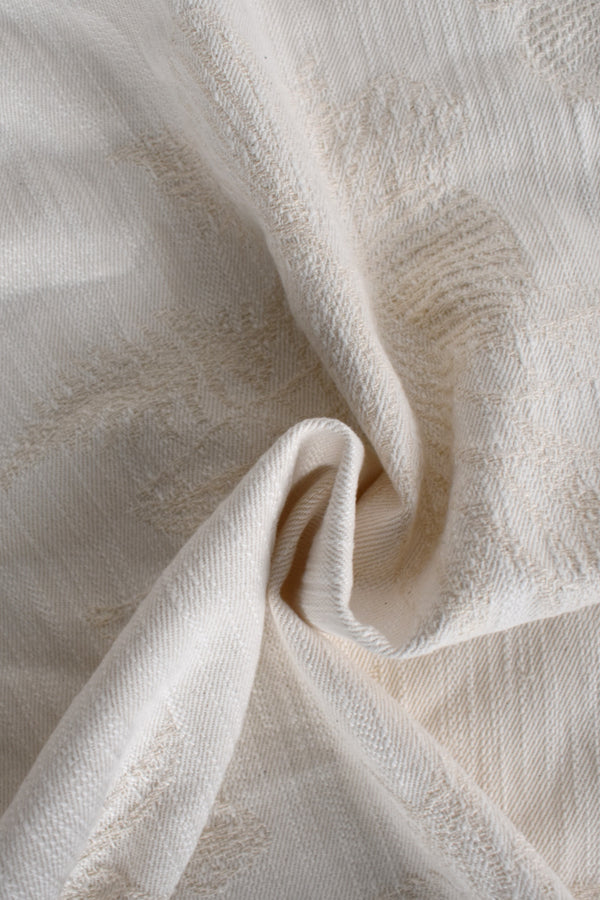
The selvedge is the self-finished edge of the fabric, which does not fray. Selvedge denim is woven on narrower, slower shuttle looms that produce a clean edge, often marked by a coloured thread. Tailors use it as a visible finish on the outer side seam: turn up the hem of the jeans and you see the classic line. It is regarded as a premium denim for high-quality jeans.
Denim vs chambray: the differences
Chambray looks like a light denim because it also has a coloured warp and white weft, but it is a plain weave, not a twill. The result is lighter, softer and more even, much the same on both sides, without denim's diagonal.
| Feature | Denim | Chambray |
|---|---|---|
| Weave | Twill, diagonal | Plain weave |
| Back | Pale, different from the face | Almost the same as the face |
| Weight | Light to very heavy | Light |
| Uses | Jeans, jackets, workwear | Shirts, dresses, summer pieces |
For shirting, see our guide to shirt fabrics, and for the diagonal weave our guide to twill fabric.
Which denim to choose
- For classic, hard-wearing jeans: 100% cotton denim at 12-15 oz, raw or washed.
- For comfortable, close-fitting jeans: stretch denim at 9-12 oz.
- For jackets and workwear: heavyweight denim or bull denim.
- For shirts, dresses and summer pieces: lightweight denim under 10 oz, or chambray.
- For trousers in general, see our guide to trouser fabric.
Sewing and washing denim
- Pre-wash raw denim, inside out in cold water, if you do not want it to shrink in the finished garment; wash it on its own, as indigo bleeds.
- Use a jeans needle, 100/16 or 110/18 for mid and heavyweights, and a strong thread.
- Finish with flat-felled seams, as on classic jeans, or overlock the allowances.
- Go slowly over thick seam crossings, using a hump jumper under the foot.
- Wash garments inside out, in cold water and without softener, to keep the colour.


Buying deadstock denim fabric
Zerow sells deadstock denim: surplus and end-of-run cloth from Italian luxury houses and mills, already made and so needing no new production. For makers, that means couture-grade quality in limited, often unrepeatable quantities. Once a roll is gone, that denim may not come back.
Fabrics are sold by the full roll. There is also a selection of fabrics cut to length, usually from a minimum of 10 metres: the details of each fabric, including composition, weight in ounces and how it is sold, are on the product page. Businesses with a VAT number have dedicated terms, and samples are available to everyone.
Our denim fabric collection includes raw and washed, stretch, black, selvedge, jacquard and recycled denim. Don't miss the special Zerow x Berto Industria Tessile collection, with denims from a historic Italian mill. For fibres and weaves, read our guide to the types of fabric.
Denim fabric FAQs
Are jeans 100% cotton?
Classic denim is 100% cotton, but many jeans today are blends: with elastane for stretch, linen for coolness or recycled cotton. The composition is always on the label.
What denim weight is best for jeans?
Everyday jeans usually use 12-15 oz denim; under 11 oz the jeans are light and summery, over 16 oz heavy and rigid.
Does raw denim bleed?
Yes, especially in the first washes: indigo can stain other garments and light surfaces. Wash it on its own, inside out, in cold water.
What is the difference between denim and jeans?
Denim is the fabric, jeans are the garment. Denim is also used for jackets, shirts, skirts and accessories.
Can I order a sample before buying?
Yes, samples are available to all Zerow customers, private and business. It is the best way to judge handle, weight and colour before ordering by the roll or cut to length.


