






Twill Fabric: What It Is, Properties and Uses
A guide to twill fabric: what the twill weave is, whether twill is breathable, the main types and how it differs from gabardine and denim.

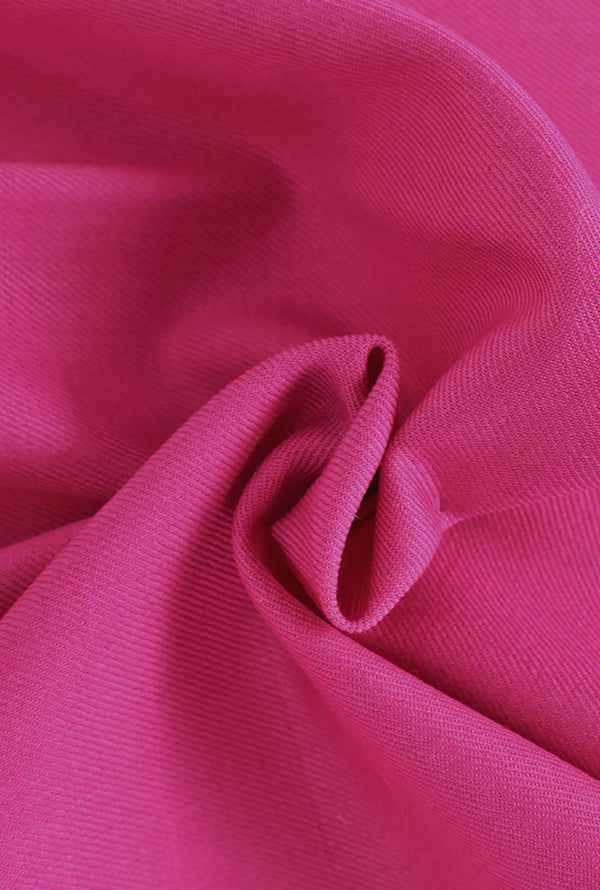
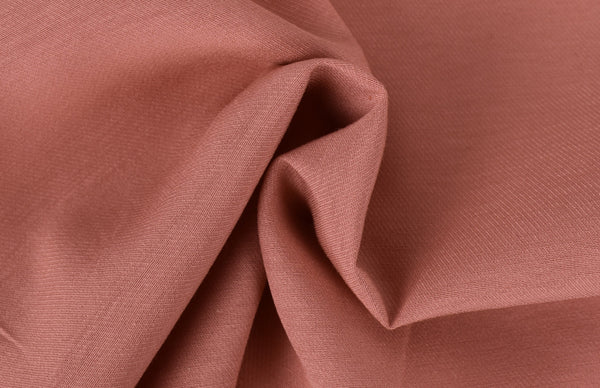
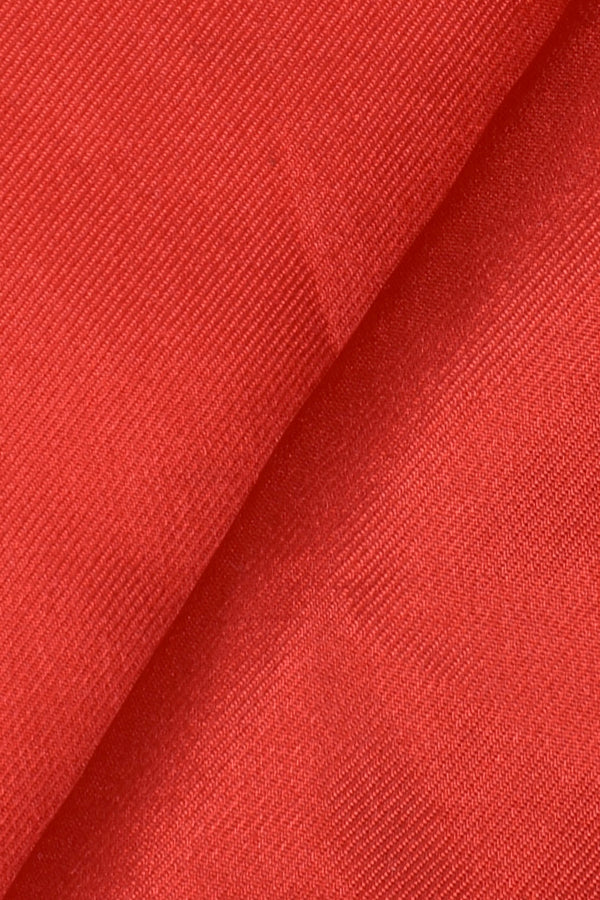
Twill fabric is any fabric woven in a twill weave, recognisable by the diagonal lines across its surface. Twill is not a fibre: it can be cotton, wool, silk, viscose or polyester, and the fibre decides how comfortable and breathable it is. It is hard-wearing, drapes well and resists creasing, which is why it is the basis of chinos, gabardine and denim.
This guide is written for tailors, designers and brands: what sets twill apart, the most common types, how to sew it and where to find it among Zerow's deadstock fabrics, surplus from Italian luxury houses and mills.
What is twill fabric?
Twill is a weave, the way warp and weft interlace. Each weft yarn passes over one or more warp yarns and under two or more, shifting by one yarn on every row. That offset creates the characteristic diagonal. Notations such as 2/1, 2/2 or 3/1 tell you how many yarns pass over and under.
| Weave | How it interlaces | Result |
|---|---|---|
| Plain weave | One over, one under | Compact, cool, flat surface |
| Twill | Over one or more, then under, with an offset | Diagonal, hard-wearing, soft drape |
| Satin | Yarns float over several others | Smooth and lustrous |
For an overview of fibres and weaves, read our guide to the types of fabric.
Twill fabric properties: is twill breathable?
The diagonal structure makes twill more compact and abrasion-resistant than plain weave, with a softer drape. It hides dirt and small marks well and creases less. The face and back often look different, with the diagonal more visible on the face.
Is twill breathable? It depends on the fibre and the weight. Cotton, linen or wool twill breathes well; polyester twill much less. With the same fibre, though, twill is denser than a light plain weave, so for summer pieces a plain weave or a lightweight twill feels cooler than a heavy twill.
Types of twill fabric
Cotton twill and chino
Cotton twill is the cloth of the chino: strong, easy to sew and pleasant to the touch. Heavier versions, sometimes blended with linen, are called drill and are used for workwear and outerwear.
Gabardine
Gabardine is a very tight twill with a steep diagonal: compact, crease-holding and used for tailored trousers, trench coats and uniforms. More in our guide to gabardine.
Denim
Denim is a cotton twill with a dyed warp and a light weft, which is why the face is dark and the back lighter. See our guide to denim.
Herringbone
Herringbone twill reverses the direction of the diagonal at regular intervals, creating the familiar zigzag pattern used for jackets and coats.
Silk and wool twill
Silk twill is soft and luminous, a classic for scarves, ties and shirts. Wool twill is warm and structured, ideal for jackets and suits.


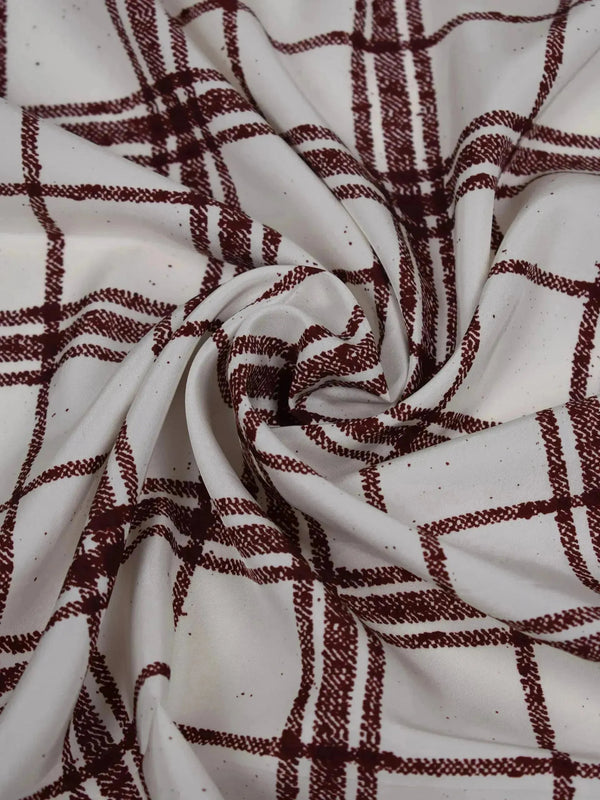
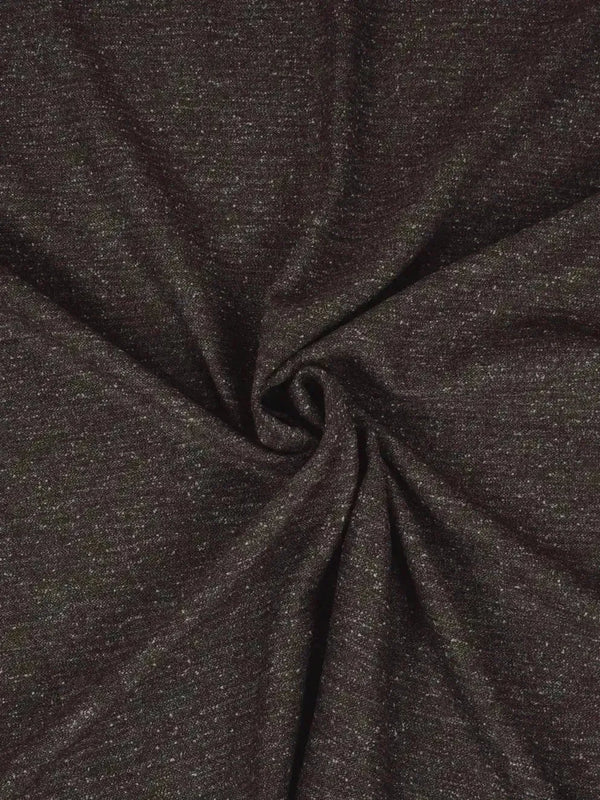
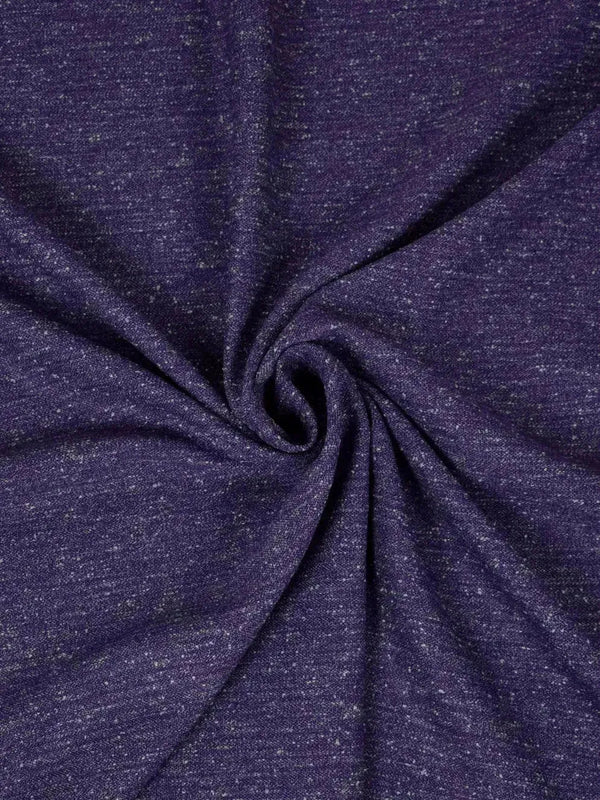
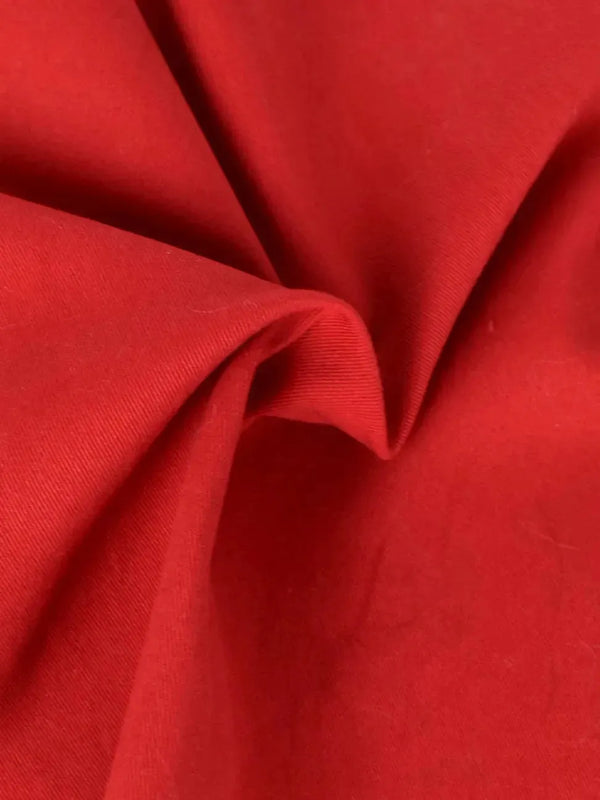
Twill, gabardine and denim: the differences
Gabardine and denim are both twills: what changes is density, fibre and dyeing.
| Cotton twill | Gabardine | Denim | |
|---|---|---|---|
| Structure | Clearly visible diagonal | Tight, steep diagonal | Diagonal with a dyed warp |
| Look | Matt, soft | Compact, smooth | Dark face, lighter back |
| Typical uses | Chinos, shirts, workwear | Tailored trousers, trench coats | Jeans, jackets |
What twill fabric is used for
- Trousers: chinos, work and tailored trousers. See our guide to trouser fabric.
- Jackets and outerwear, including drill.
- Shirts, in lightweight cotton twill.
- Scarves, ties and linings, in silk and viscose twill.
Sewing and caring for twill
Cut every piece with the diagonal running the same way, otherwise the lines meet badly at the seams and the colour can look different from piece to piece. With a pronounced diagonal, avoid designs with many bias cuts.
Press on the wrong side or with a cloth: on wool and polyester twill a direct iron can leave shine. Wash according to the fibre: cotton twill can shrink, so pre-wash it before cutting.


Where to buy deadstock twill fabric
Zerow sells deadstock fabrics: surplus and end-of-run stock from Italian luxury houses and mills, already made and so requiring no new production. For makers, that means couture-grade quality in limited, often unrepeatable quantities: once a roll is gone, that fabric may not come back.
Fabrics are sold by the full roll. There is also a selection of fabrics cut to length, usually from a minimum of 10 metres: the details of each fabric, including how it is sold, are shown on the product page. Businesses with a VAT number have dedicated terms, and samples are available to everyone.
Twill fabric: frequently asked questions
What is twill fabric made of?
Twill is not a material but a weave. It can be made of cotton, wool, silk, viscose, linen or polyester: the composition is always shown on the label and the product page.
Is twill breathable?
It depends on the fibre and the weight. Cotton, linen and wool twill breathe well; polyester twill much less. With the same fibre, a heavy twill is less airy than a light plain weave.
What is the difference between twill and gabardine?
Gabardine is a type of twill: tighter, with a steeper diagonal and a compact surface. It holds a crease better and looks more formal, while cotton twill is more casual.
Is denim the same as twill?
Denim is a cotton twill with a dyed warp and a light weft, so it is a type of twill. Not every twill is denim: there are wool, silk and viscose twills with very different looks and uses.
Does twill crease?
Less than a plain weave in the same fibre, thanks to its compact structure. Pure cotton twill can still mark; wool twill and polyester blends stay neater.
Can I order a sample before buying?
Yes, samples are available to all Zerow customers, private and business. It is the best way to judge handle, weight and colour before ordering by the roll or cut to length.


