






Chamois vs Suede: Differences, Uses and How to Tell Them Apart
Chamois leather, suede and nubuck compared: which side of the skin is worked, how they are tanned, how to tell them apart, which to choose and how to care for them.

Chamois leather and suede are not the same thing, even though the two names are often mixed up. Suede is a finish: the inner side of calf, goat or lamb skin is buffed until it develops a soft, velvety nap. Chamois leather, in the technical sense, is sheepskin tanned with oils: extremely soft, porous and able to soak up a lot of water.
This guide to chamois vs suede is written for designers, leather goods makers, shoemakers and brands: what sets chamois, suede and nubuck apart, how to recognise them, which to choose for each product, how to care for them and where to find deadstock suede on Zerow, sourced from the surplus of Italian luxury houses and tanneries.
Chamois vs suede vs nubuck at a glance
The difference lies in which side of the skin is worked and how it is tanned:
| Suede | Chamois | Nubuck | |
|---|---|---|---|
| Side worked | Flesh side or split, buffed | Flesh split of sheepskin | Grain (outer side), buffed |
| Tanning | Usually chrome, sometimes vegetable | Oil tanning | Usually chrome |
| Animal | Calf, goat, lamb, pig | Today sheep and lamb | Mainly calf |
| Nap | Longer and soft | Dense, very soft and porous | Short and fine |
| Typical uses | Shoes, bags, clothing, gloves | Cleaning cloths, gloves, delicate garments | Shoes, bags, upholstery |
What is suede leather?
Suede is not an animal but a finish. It is made by buffing the flesh side of a skin, the inner side, or the split, the lower layer obtained by dividing a thick hide. Buffing raises the fibres and creates the characteristic velvety nap.
It can be applied to many skins: calf suede is dense and suits shoes and bags; goat suede is light and hard-wearing; lamb suede is the softest and thinnest, ideal for clothing and gloves. There is also "reverse" suede, where the flesh side of a full skin is used as the face.
What is chamois leather?
Chamois leather originally came from the Alpine chamois. Today, according to industry standards, it is made from the flesh split of sheepskin or lambskin and tanned with oils, traditionally marine oils. This oil tanning, known as chamoising, makes it very soft, porous and washable, with a typical creamy yellow colour.
Because of these qualities, genuine chamois is used mainly for cloths that dry and polish glass and car bodywork, for gloves and for some very delicate garments. Watch out for everyday language, though: in many countries "chamois shoes" or a "chamois jacket" usually means calf, goat or lamb suede.
What about nubuck?
Nubuck is often confused with chamois, but it is different again: it is made by buffing the grain, the outer side of the skin, not the flesh side. The result has a shorter, finer nap and a tougher surface. For a detailed comparison, read our article on nubuck vs suede.


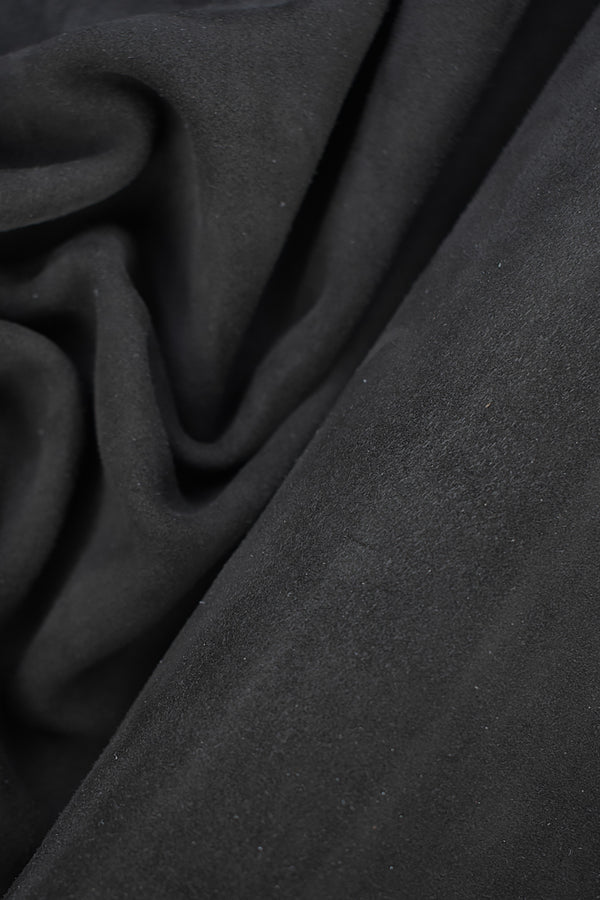
How to tell chamois and suede apart
- The nap: on suede it is longer and changes colour when you brush it the wrong way; on nubuck it is short and almost smooth; on chamois it is dense and very soft.
- The surface: on nubuck you can still see the grain pattern, while suede looks uniform.
- Water: genuine chamois soaks it up at once and turns soft again once dry; suede marks and needs protecting.
- The label or product page: animal, tanning and thickness tell you more than any trade name.
Chamois or suede: which to choose
| Product | Recommended choice |
|---|---|
| Shoes and boots | Calf or goat suede, nubuck for a tougher surface |
| Bags and small leather goods | Medium-weight goat or calf suede |
| Jackets and clothing | Thin, soft lamb or goat suede |
| Gloves | Lamb suede or chamois |
| Cleaning and polishing cloths | Oil-tanned chamois leather |
Thickness matters for every item: thin skins for clothing and gloves, heavier ones for shoes and bags. You will find it on each skin's product page.
How to care for suede and chamois
Suede is cleaned dry, with a soft brush or a suede eraser that lifts the nap and removes dust. Treat it with a waterproofing spray before use; if it gets wet, let it dry away from heat and brush it once dry.
Oil-tanned chamois leather, on the other hand, can be hand washed in lukewarm water with a mild soap: squeeze it without wringing, let it air dry and then flex it gently to bring back its softness.


Where to buy deadstock suede
Zerow sells deadstock leathers: surplus and end-of-run stock from Italian luxury houses and tanneries, already made and so requiring no new production. For makers, that means couture-grade quality in limited, often unrepeatable quantities.
Leathers are sold by the skin: choose how many skins you need, and the product page shows the average m² of each skin, its thickness and the other specifications. Businesses with a VAT number have dedicated terms, and samples are available to everyone.
Chamois vs suede: frequently asked questions
Is chamois the same as suede?
No. Suede is a finish that can be applied to calf, goat or lamb; chamois leather, in the technical sense, is oil-tanned sheepskin. In everyday language, however, "chamois" is often used to mean suede.
What animal does suede come from?
Suede leather comes from many animals: mainly calf, goat, lamb and pig. The name refers to how the flesh side is worked, not to the animal.
What is the difference between nubuck and suede?
Nubuck is made by buffing the grain, the outer side of the skin, and has a short, fine nap; suede comes from the flesh side or the split and has a longer, softer nap.
Can suede get wet?
Best avoided: water can stain and stiffen it. Treat it with a waterproofing spray and, if it gets wet, let it air dry and brush it once dry. Oil-tanned chamois leather, by contrast, can be washed.
What is chamois used for?
Mainly for drying and polishing cloths, gloves and some delicate garments, because it is soft, absorbent and washable.
Can I order a sample before buying?
Yes, samples are available to all Zerow customers, private and business, for leathers too. It is the best way to judge handle, colour and thickness before ordering.


