






Lambskin leather: properties, types and lamb vs calf
A guide to lambskin leather: what it is, pros and cons, lamb vs calf and goat, types, uses, shearling and faux leather, working and care.

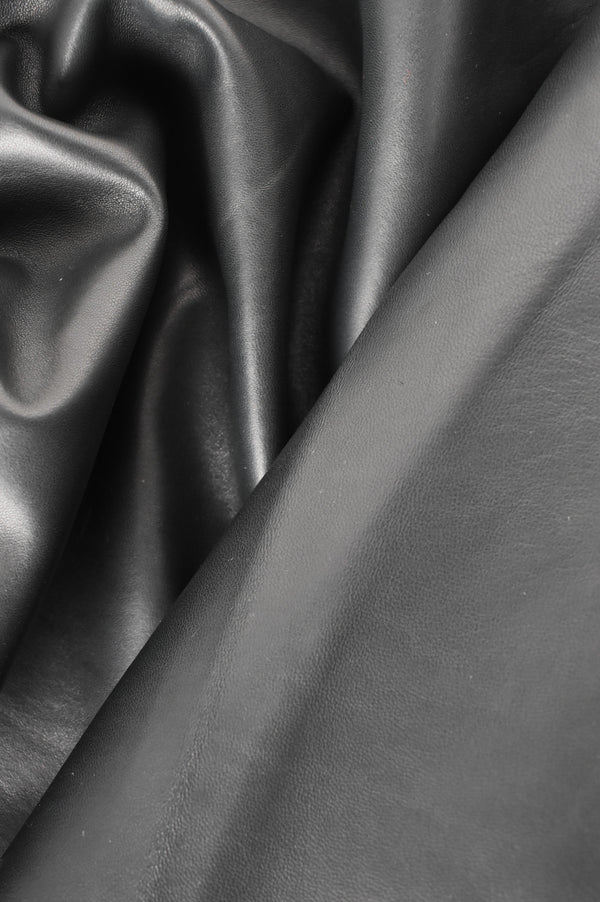
Lambskin leather comes from young sheep: it is thin, light and very soft, with a fine grain and a silky handle. It is the leather most used for jackets, garments and gloves, and also for soft bags, small leather goods and linings.
This guide is for tailors, leather goods makers, designers and brands. It covers what lambskin is, its pros and cons, how it compares with calf and goat, the main types, uses, how it differs from shearling and faux leather, how to work with it and care for it, and where to find it among Zerow's deadstock leathers.
What is lambskin leather?
Lambskin comes from young sheep. Compared with bovine hides it is thinner and lighter, with a looser fibre structure that gives it a softness and drape calf cannot match, as Britannica notes in its overview of sheep and lamb leathers. For the same reason it is less resistant to abrasion and tearing, so it is used mainly where handle and fit matter most.
Thicknesses usually range from about 0.4 to 1.3 mm. Most lambskin is chrome-tanned for maximum softness, but vegetable-washed versions with a more natural look also exist.
Properties of lambskin leather
| Pros | Cons |
|---|---|
| Very soft, light, with beautiful drape | Less durable than calf and goat |
| Fine grain and a silky handle | Scratches and marks more easily |
| Moulds to the body and sews almost like fabric | Not ideal for structured bags or hard-wearing items |
| Warm and comfortable to wear | Dislikes water and stains unless treated |
Lamb, calf and goat compared
| Feature | Lamb | Calf | Goat |
|---|---|---|---|
| Typical thickness | Thin | Medium to thick | Thin to medium |
| Handle | Very soft, silky | Firm | Soft but springy |
| Strength | Lower | High | High for its weight |
| Grain | Fine and smooth | Fine and even | More pronounced |
| Typical uses | Jackets, gloves, linings | Bags, shoes, belts | Shoes, gloves, leather goods |
For bovine leather, read our guide to calfskin leather; for the full picture, our guide to the types of leather.
Types of lambskin leather
- Lamb nappa: the most common, smooth and very soft; covered in our guide to nappa leather.
- Full grain: with the natural grain intact, the finest quality.
- Tumbled: milled in a drum for a softer, more pronounced grain.
- Metallic and patent: foiled, holographic or mirror-shine.
- Printed: with embossed designs, such as a denim effect.
- Suede: buffed on the flesh side for a velvety finish.
- Lining lamb: thin and light, for lining bags and shoes.
- Vegetable-washed: with a more natural, lived-in look.




What lambskin leather is used for
- Jackets, bikers and leather garments: the classic choice for clothing.
- Trousers, skirts and dresses, in the thinnest weights.
- Gloves, where thinness and feel are essential.
- Soft bags, clutches and small leather goods.
- Linings for bags and shoes.
Lambskin, shearling and faux leather
Lambskin with the wool left on is shearling: warm and bulky, very different from the smooth lamb nappa covered here. See our guide to shearling for the details.
Faux lambskin, by contrast, is a synthetic material, usually polyurethane, that imitates the look of lamb nappa. It costs less but lacks the breathability, softness and lifespan of real leather.
Working with lambskin and caring for it
- Cut in a single layer with a sharp cutter or rotary blade, and hold pieces with weights or clips instead of pins, which leave holes.
- Use fine 70/10 or 80/12 leather needles and a slightly long stitch: dense stitching weakens the skin.
- Reinforce stress points such as shoulders and pockets with tape or a light fusible.
- Press only if needed, on a low setting, without steam and with paper or cloth between iron and leather.
- For care, dust with a soft cloth and use a conditioner for delicate leathers; take serious stains to a specialist.


Buying deadstock lambskin leather
Zerow sells deadstock lambskin: surplus and end-of-run skins from Italian luxury houses and tanneries, already made and so needing no new production. Quantities are limited and variants are rarely repeated: once a skin is gone, it may not come back.
Leathers are sold by the skin, so you choose how many skins you need. Each product page shows the average m² per skin, the thickness and the other specifications. Businesses with a VAT number have dedicated terms, and samples are available to everyone.
Our lambskin collection includes smooth and full-grain nappa, tumbled, metallic, printed, suede and lining lambskins, in many colours and thicknesses.
Lambskin leather FAQs
Is lambskin leather durable?
It is less durable than calf because it is thinner with looser fibres, but it lasts well where softness matters, as in jackets, if cared for with a suitable conditioner.
Lamb or calf for a leather jacket?
For a soft, light jacket, lamb is almost always the choice; calf gives a stiffer, more structured garment that softens over time.
Does lambskin scratch easily?
Yes, more easily than bovine leather, especially smooth and glossy finishes. Light marks often fade when you massage in a conditioner.
How do you clean lambskin?
With a soft, slightly damp cloth and a cleaner for delicate leathers, followed by a conditioner. Avoid soaking and heat; take stubborn stains to a specialist.
Can I order a sample before buying?
Yes, samples are available to all Zerow customers, private and business, leathers included. It is the best way to judge handle, thickness and colour in person.


