






Patent leather: what it is, naplak, metallic and care
A guide to patent leather: what it is, naplak, patent vs metallic laminated leather, pros and cons, types, uses, care and handling.

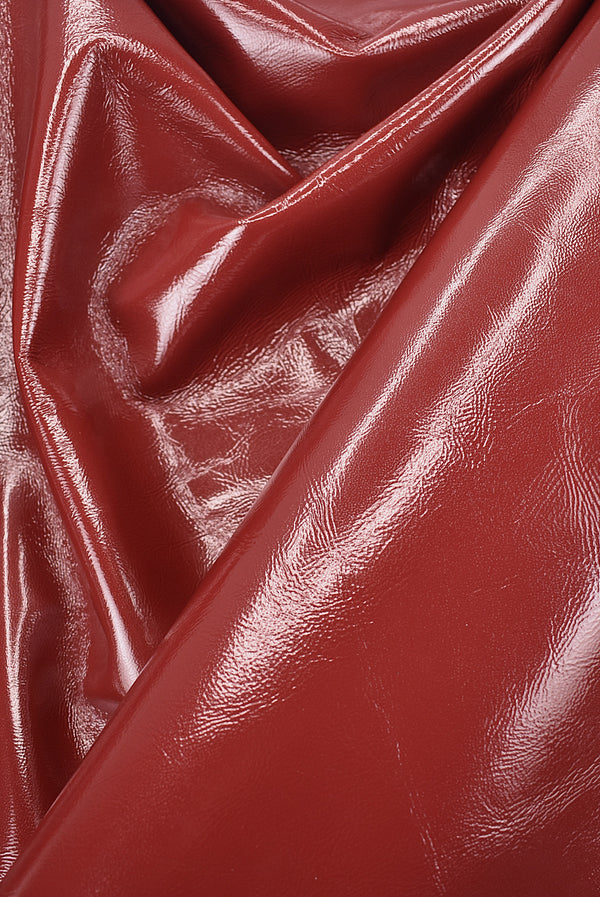
Patent leather is genuine leather, usually calfskin, finished with a glossy coating that gives it a mirror shine and a smooth, water-resistant surface. It is the classic leather for formal shoes, glossy bags and statement accessories.
This guide is for leather goods makers, shoemakers, designers and brands. It covers what it is, what naplak leather is, how patent differs from metallic laminated leather, pros and cons, the main types, uses, care and handling, and where to find it among Zerow's deadstock leathers.
What is patent leather?
It starts as tanned leather, almost always fine-grained bovine leather, coated with a finish that cures into a smooth, glossy film. Britannica describes it as leather with a hard, glossy finish. Early versions appeared in the early nineteenth century using linseed-oil varnishes; today the coating is almost always polyurethane or acrylic, which is more flexible and durable.
Underneath the coating it is still real leather, so unlike glossy faux leather it has a fibrous reverse side and the smell of leather.
Naplak leather: what it is and whether it is real leather
Naplak is nappa leather, soft and usually calf or lamb, finished with a glossy film that is thinner and more elastic than a classic patent coating. The result is shiny but less rigid: it folds better and stays soft to the touch. So yes, naplak is real leather, halfway between nappa and patent.
For nappa in general, read our guide to nappa leather.
Patent or metallic laminated leather?
Laminated leather is covered with a very thin metallic foil that gives gold, silver, bronze or holographic reflections. The two are often confused because both shine.
| Feature | Patent | Naplak | Metallic laminated |
|---|---|---|---|
| Finish | Thick glossy coat, mirror effect | Thin glossy film | Metallic foil |
| Look | Full gloss, intense colours | Soft gloss | Metallic or holographic sheen |
| Handle | Stiff | Soft | Soft to firm |
| Water resistance | High on the surface | Good | Medium |
| Weak point | Cracks at folds | Light scratches | Foil wear |
| Typical uses | Formal shoes, structured bags | Soft bags, garments | Shoes, bags, evening details |


Properties: pros and cons
| Pros | Cons |
|---|---|
| Glossy look and bright colours | Not very breathable |
| Water-resistant surface, easy to wipe clean | Stiffer versions can crack at folds |
| Holds its shape well | Scratches show and cannot be fully removed |
| Needs no polishing | Can pick up dye from materials it touches |
Types of patent and laminated leather
- Patent calf: the classic, mirror-shine, for shoes and bags.
- Printed patent: patent coating over a print, such as croc.
- Naplak: nappa with a soft glossy finish.
- Patent lamb: thinner and softer, also for garments.
- Metallic laminated: gold, silver, bronze, on calf, lamb or kid.
- Holographic or pearlised: iridescent sheen for details and eveningwear.


What it is used for
- Formal and evening shoes: pumps, oxfords, loafers.
- Structured bags, clutches and small leather goods.
- Belts and accessories.
- Jackets, skirts and statement garments, in naplak and softer lamb.
- Details and inserts, paired with matt or suede leathers.
How to care for it
- Wipe with a soft, slightly damp cloth; a dry cloth is enough for fingerprints.
- To keep the shine, use a dedicated patent cleaner, not creams for smooth leather.
- Store pieces separately in fabric bags: patent can pick up dye from plastic, printed paper or other leathers.
- Avoid direct heat and intense cold, which can make the film tacky or brittle.
- Use shoe trees to limit deep creases that may crack.
Working with it
- Cut from the grain side on a clean surface so you do not scratch the coating.
- Use leather needles and an even stitch: holes do not close and stay visible.
- Do not fold the stiffer weights cold; warm the leather slightly where a fold is unavoidable.
- Use glue sparingly and avoid harsh solvents, which dull the surface.
Where to buy deadstock patent leather
Zerow sells deadstock patent and laminated leathers: surplus and end-of-run skins from Italian luxury houses and tanneries, already made and so needing no new production. Quantities are limited and variants are rarely repeated: once a skin is gone, it may not come back.
Leathers are sold by the skin, so you choose how many skins you need. Each product page shows the average m² per skin, the thickness and the other specifications. Businesses with a VAT number have dedicated terms, and samples are available to everyone.
Our patent leather collection includes patent calf, patent lamb and naplak; our metallic laminated leather collection has gold, silver and holographic finishes. For the full picture, read our guides to the types of leather and calfskin leather.
Patent leather FAQs
Is patent leather real leather?
Yes: it is genuine leather, almost always calf, with a glossy coating on top. Glossy faux leather, by contrast, is fully synthetic with a fabric backing.
Does patent leather crack?
It can at very deep folds or in the cold, especially stiffer versions. Shoe trees and careful storage reduce the risk.
How do you remove a scratch?
Surface marks soften with a patent cleaner and a soft cloth; deep scratches that cut into the film cannot be fully removed.
Can it get wet?
Yes, the surface repels water well: just wipe it dry. Avoid leaving it wet for long or drying it near heat.
Can I order a sample before buying?
Yes, samples are available to all Zerow customers, private and business, leathers included. It is the best way to judge shine, handle and colour in person.


