






Shirting fabric: the best fabrics for shirts and how to choose
A guide to shirting fabric: how to choose it, poplin, oxford, twill, end-on-end and more, summer and winter fabrics, men's and women's shirts.

The best shirting fabrics are almost always cotton, but the right one depends on the shirt: poplin for a dress shirt, oxford for a casual one, twill and end-on-end for the office, batiste, seersucker and linen for summer, flannel for winter. Fibre, weave and yarn fineness make the difference.
This guide is for tailors, designers and brands. It covers how to choose a shirt fabric, the most common cloths and how they differ, which to pick for summer and winter, what changes between men's and women's shirts, how to sew them and where to find them among Zerow's deadstock fabrics, surplus from Italian luxury houses and mills.
How to choose a shirt fabric
Three things decide how a shirt will turn out. The fibre: cotton is the standard because it is cool, strong and easy to press, while linen, silk, viscose and wool cover more specific needs. The weave: a dense plain weave gives a smooth surface, a twill a softer diagonal and a basket weave a more textured cloth, as Britannica explains in its entry on plain weave. And the yarn: the finer it is, the lighter, smoother and more refined the fabric.
Labels show fineness as a yarn count: a higher number means a finer thread. "/2" means two-ply, two yarns twisted together, stronger and more even, typical of quality shirting.
The main shirting fabrics
| Fabric | Character | Best for |
|---|---|---|
| Poplin | Very dense plain weave, smooth, slight sheen | Dress shirts, office, formal |
| Twill | Fine diagonal, softer, creases less | Office, everyday |
| Oxford | Basket weave with paired yarns, thicker and textured | Casual, button-down |
| Pinpoint | Finer, denser oxford | Between casual and dressy |
| End-on-end | Warp and weft alternate two colours, speckled effect | Office, under a jacket |
| Chambray | Light plain weave, coloured warp and white weft | Casual summer |
| Batiste and voile | Very fine plain weaves, almost sheer | Lightweight summer |
| Seersucker | Puckered cotton stripes, stands off the skin | Summer, informal |
| Linen | Cool, dry, creases a lot | Summer, casual |
| Flannel | Brushed cotton or wool, soft and warm | Winter, overshirts |
For the classic shirting cloth, read our guide to poplin fabric; for diagonal weaves, the one on twill fabric.
Oxford cloth: how it is made and when to use it
Oxford is a basket-weave variant of the plain weave: fine warp yarns work in pairs over a heavier weft. The warp is often coloured and the weft white, which gives the typical slightly speckled look. It is thicker and rougher than poplin, breathes well and creases less.
It is the fabric of the button-down shirt, worn with or without a tie. Pinpoint is a finer version, closer to the polish of poplin; royal oxford has a more visible, lustrous weave.
Summer shirt fabrics
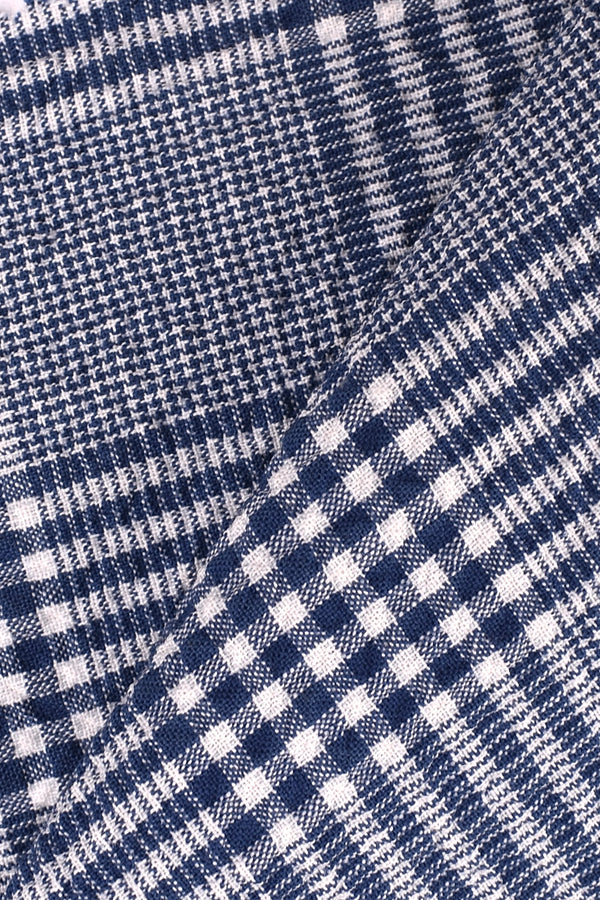
Summer calls for light fabrics that let air through. Lightweight cotton poplin is the most versatile choice; batiste and voile are finer still; seersucker, with its puckered stripes, stands away from the skin and stays fresh without ironing; linen is the most breathable, if you accept its creases. Madras, light cottons in bright checks, is another summer classic.


Winter shirt fabrics
Winter needs heavier, warmer cloths. Cotton flannel, brushed on one or both sides, is soft and warm; wool or wool and cashmere flannel is more refined and also suits overshirts and shirt jackets. Heavy twills, oxford and fine corduroy complete the range. Typical patterns are checks, tartans and Glen check: for their names, read our guide to check fabrics.


Men's and women's shirts: what changes
In men's shirts, structure matters most, along with how collars and cuffs hold: poplin, twill, oxford and end-on-end are the usual choices. Women's shirting uses the same cottons but also more fluid cloths such as silk, crepe, viscose and georgette, suited to soft blouses and fuller cuts.
How to sew a shirt
- Pre-wash cotton and linen so the shirt does not shrink later.
- Cut on a well-aligned grain: stripes and checks must match across fronts, yoke and pockets.
- Use French or flat-felled seams, which enclose the edges and survive washing.
- Reinforce collar, placket and cuffs with an interfacing suited to the fabric weight.
- Use a fine needle and short stitch on fine cottons, a sturdier needle on flannel and oxford.
Buying deadstock shirting fabric
Zerow sells deadstock shirt fabrics: surplus and end-of-run cloth from Italian luxury houses and mills, already made and so needing no new production. For makers, that means couture-grade quality in limited, often unrepeatable quantities. Once a roll is gone, that fabric may not come back.
Fabrics are sold by the full roll. There is also a selection of fabrics cut to length, usually from a minimum of 10 metres: the details of each fabric, including how it is sold, are on the product page. Businesses with a VAT number have dedicated terms, and samples are available to everyone.
Our fabrics for shirts include plain, striped, madras and printed poplin, cotton and wool flannel, seersucker, gingham and Glen check. For fibres and weaves, read our guide to the types of fabric.
Shirting fabric FAQs
What is the best fabric for shirts?
It depends on the shirt. Two-ply cotton poplin for a dress shirt; twill and end-on-end for the office; oxford for a casual shirt; linen, batiste and seersucker for summer; flannel for winter.
Poplin or oxford?
Poplin is smooth and slightly lustrous, ideal for dress shirts. Oxford is thicker and textured, creases less and suits casual and button-down shirts.
What is end-on-end fabric?
A cloth in which warp and weft alternate two colours, usually one light and one dark. From a distance it looks solid; up close it shows a fine speckle.
What does 100/2 mean on a shirt label?
It is the yarn count: 100 is the fineness, and the higher it is the finer the thread; /2 means two yarns twisted together, stronger and more even.
Which shirt fabric creases least?
Twill, oxford and cottons with a little elastane crease less than pure cotton poplin and linen. Easy-care finishes help too.
Can I order a sample before buying?
Yes, samples are available to all Zerow customers, private and business. It is the best way to judge handle, weight and colours before ordering by the roll or cut to length.


