






Tartan fabric: the Scottish check, fibres and how to sew it
A guide to tartan fabric: the sett, history and clans, how it differs from other checks, fibres and how to cut and sew it.

Tartan is a check pattern made of coloured stripes crossing at right angles, in the same order in warp and weft. Born in Scotland and traditionally woven in wool, tartan fabric now also comes in cotton, viscose and blends. It is an autumn and winter classic: kilts, pleated skirts, coats, jackets and shirts.
This guide is for tailors, designers and brands. It covers what tartan is, the history of the Scottish pattern, how it differs from plaid, gingham and Prince of Wales check, the fibres it comes in, how to cut and sew it and where to find it among Zerow's deadstock fabrics, surplus from Italian luxury houses and mills.
What is tartan fabric?
The Scottish Register of Tartans, Scotland's official register, defines tartan as a design capable of being woven, made of two or more alternating coloured stripes that combine vertically and horizontally into a repeated checked pattern, as its FAQs explain. The stripe sequence, with its exact colours and widths, is called the sett, and it repeats identically across the cloth.
In a classic tartan the colour order is the same in warp and weft, and the cloth is often a twill: where two stripes of the same colour cross you get a solid square, where two different colours cross you get a blend. That interplay gives tartan its depth.
Tartan history and clans
Tartan comes from the Scottish Highlands, where checked woollen cloth was coloured with local natural dyes. In the eighteenth century, after the Jacobite risings, Highland dress was banned for several decades; when the ban was lifted, tartan returned as a symbol of Scottish identity and in the nineteenth century became linked to the clans. Family, district and regimental tartans still exist today, such as the blue-green Black Watch or the red Royal Stewart, and new ones are registered every year. In fashion, tartan keeps coming back, from punk to tailored collections.
Tartan, plaid, gingham and Prince of Wales
| Pattern | Character |
|---|---|
| Tartan | Several colours and stripes of different widths, same sett in warp and weft |
| Plaid | In American English, a general word for tartan-like checks |
| Check | Any fabric with a squared pattern |
| Gingham | Two colours, small even squares |
| Prince of Wales | Large checks built from small houndstooth and fine lines, in muted tones |
| Madras | Light cotton checks in bright colours, a summer classic |
| Buffalo check | Large two-colour blocks, often red and black |
For other checks, read our guide to check fabric.
What tartan fabric is made of
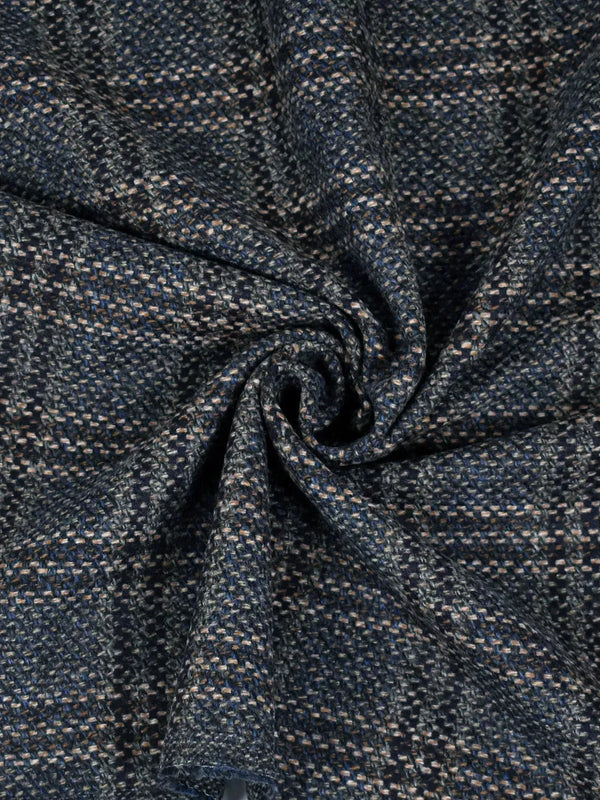
- Wool and virgin wool: traditional tartan, warm and structured, for kilts, skirts and coats.
- Woollen and coating cloth: softer and fuller, for outerwear.
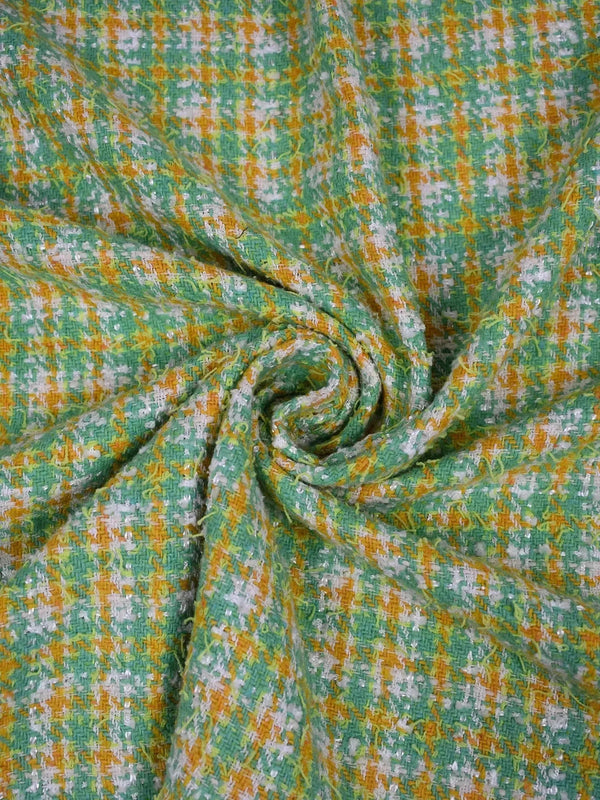
- Cotton and flannel: lighter and washable, for shirts and dresses; see our guide to flannel fabric.
- Viscose and stretch blends: fluid or stretchy, for trousers and dresses.
- Blends with lurex or silk: for evening and party wear.





What tartan fabric is used for
- Kilts and pleated skirts, the most traditional use.
- Coats, capes and jackets, often in coating cloth or woollen tartan.
- Trousers and tailored suits in worsted tartan.
- Shirts and dresses in cotton or viscose tartan.
- Scarves, bags, accessories and interiors.
To compare winter cloths, read our guide to tweed fabric.
Cutting and sewing tartan
- Allow extra fabric, usually at least one pattern repeat per main piece, so you can match the checks at the seams.
- Check whether the tartan is symmetrical or asymmetrical: asymmetrical setts need all pieces cut in the same direction.
- Cut in a single layer, matching the dominant stripes at centre front, side seams and sleeves.
- Baste or pin closely along the stripes so the checks do not shift while sewing.
- Press with steam and a pressing cloth, especially on wool tartan, to avoid shine.


Buying deadstock tartan fabric
Zerow sells deadstock tartan: surplus and end-of-run cloth from Italian luxury houses and mills, already made and so needing no new production. For makers, that means couture-grade quality in limited, often unrepeatable quantities. Once a roll is gone, that tartan may not come back.
Fabrics are sold by the full roll. There is also a selection of fabrics cut to length, usually from a minimum of 10 metres: the details of each fabric, including composition and how it is sold, are on the product page. Businesses with a VAT number have dedicated terms, and samples are available to everyone.
Our tartan fabric collection includes tartans and checks in wool, virgin wool, cashmere, cotton, viscose and blends, from fresco wool to coating cloth. For fibres and weaves, read our guide to the types of fabric.
Tartan fabric FAQs
Is tartan Scottish or English?
Scottish: it comes from the Highlands, and official tartans are still recorded in the Scottish Register of Tartans. The word plaid originally meant the woollen blanket-like garment worn in Scotland.
Are tartan and plaid the same?
In everyday American English, yes. Strictly speaking, tartan is a specific design with its own sett, while plaid or check can describe other squared patterns too.
How much extra fabric do I need for tartan?
It depends on the size of the repeat: usually add at least one repeat per main piece, more for large or asymmetrical tartans.
Wool or cotton tartan?
Wool is warmer and more structured, for skirts, kilts and coats; cotton is lighter and washable, ideal for shirts and transitional dresses.
Can I order a sample before buying?
Yes, samples are available to all Zerow customers, private and business. It is the best way to judge colours, scale of the check and handle before ordering by the roll or cut to length.


