










Leather or Cuoio? Learn the Differences for Each Use

In the fashion and craft industry, the choice between leather or leather is never trivial-it is the first step in determining the quality, functionality, and identity of each product. In this article, we explore the real differences between leather or leather, when to prefer one or the other based on the type of workmanship, and what are the technical characteristics to evaluate before purchasing. If you work as an artisan or develop collections for a brand, know thoroughly leather or leather will enable you to design with more precision, efficiency, and awareness.
Leather and cuoio: differences for each use in fashion
Choose between leather or leather is one of the most important decisions for those working in fashion and crafts. The difference between leather or leather is not just a matter of thickness or stiffness, but concerns aesthetics, performance, durability, and perception of the final product. Each material has its own personality, and understanding the peculiarities of leather or leather allows you to make more informed, targeted design choices that are in line with the quality you want to convey.
Many people use the terms leather or leather as synonyms, but in reality, there are differences to consider:
- The leather is a thicker, textured, solid material that is ideal for objects that need to maintain shape and presence.
- Leather leather, on the other hand, is thinner, softer, moldable and suitable for garments that require flexibility and comfort. Both are derived from treated animal hides, but their tanning process, workability and final effect change considerably.
Those who work in tailors, ateliers, craft workshops, or fashion brands know how important it is to know the differences between leather or leather before buying. Whether you are making bags, belts, jackets or accessories, the choice between leather or leather is what defines the end result: not only aesthetically, but also in terms of perceived quality and durability.
In the next section we will look in detail at when it is appropriate to choose leather or leather, depending on the type of design, processing and intended use.
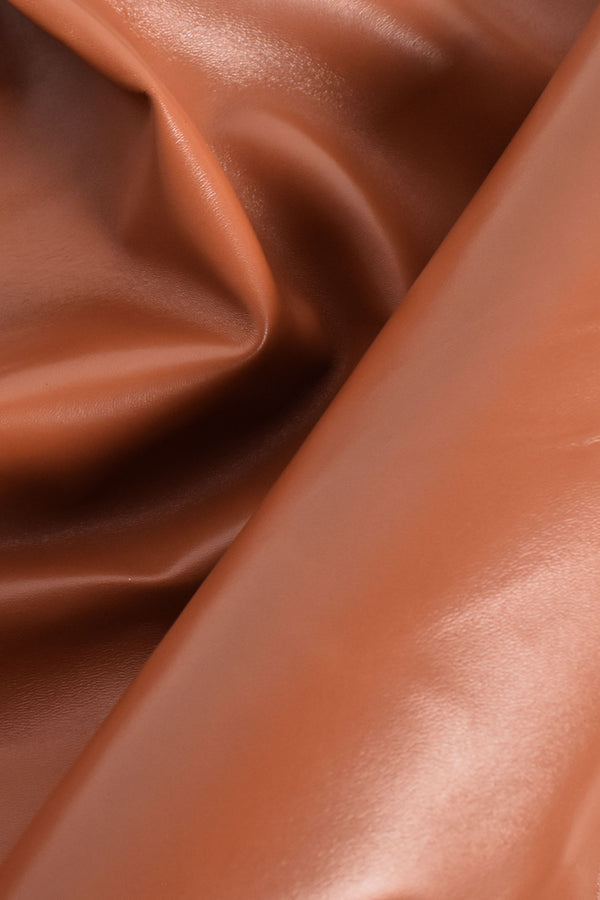
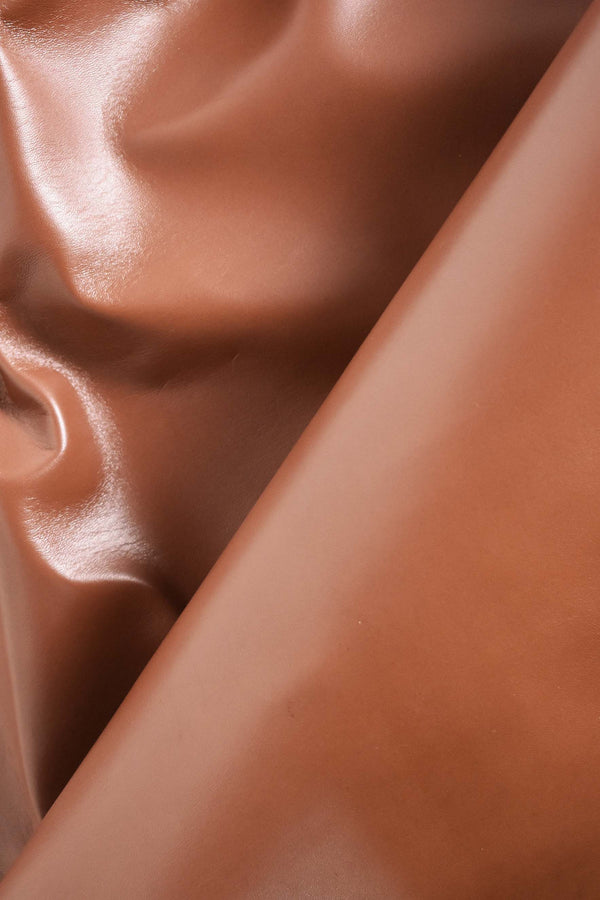
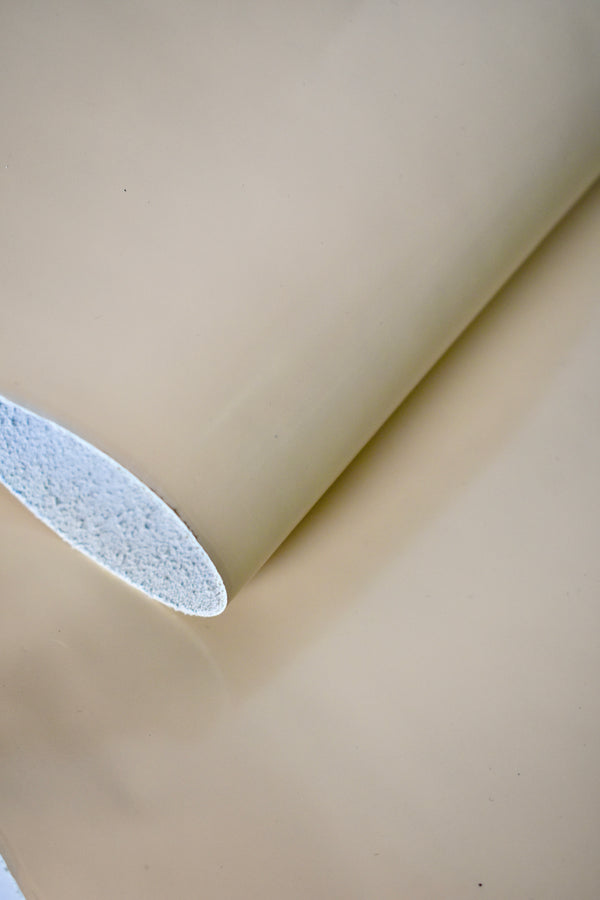
: invalid url input --> "Nappa calfskin for Leathergoods 0.3 / 0.5 mm")
When to choose leather or leather for your projects
Understanding when to choose leather or leather means translating technical differences into practical and strategic choices. Each project requires a specific material, and the distinction between leather or leather becomes crucial when moving from theory to production.
Here is a comparative table to make it easier to choose between leather or leather, depending on the type of product:
| Product type | Preferable leather | Preferable leather |
|---|---|---|
| Structured bags | ✔ Greater rigidity and shape retention | ✘ Too flexible to hold structure |
| Soft clutches and clutches | ✘ Too rigid | ✔ Ideal for draping and soft stitching |
| Classic footwear | ✔ Good for soles and reinforcements | ✔ Perfect for uppers and linings |
| Belts | ✔ High tensile strength and wear resistance | ✘ Less stable over time |
| Jackets, blazers, and coats | ✘ Not ergonomic | ✔ Adapts to movement and fit |
| Wallets and small leather goods | ✔ Maintains shape over time | ✔ Adds softness and lightness |
| Decorative fashion accessories | ✔ Ideal for precise incisions and cuts | ✔ Great for color play and fine stitching |
| Decorative accessories | ✔ If a textured effect is desired | ✔ If you are looking for comfort and softness |
To make it even easier to choose between leather or leather, here are some key questions to ask yourself:
-
Does my product need structure or softness?
-
Do I want to emphasize stiff or fluid seams?
-
Is durability or flexibility of use more important?
-
Do I need to engrave, laser cut, or apply specific decorative techniques?
-
Will the final product be in contact with the skin (e.g., jackets, gloves) or will it have a more structural function?
Summary checklist for deciding between leather or leather:
-
✅ You need stiffness, thickness and strength → Leather
-
✅ You are looking for comfort, adaptability and softness → Leather
-
✅ The product needs to last for years without deforming → Leather
-
✅ You want to make stylish and comfortable clothing → Leather
-
✅ You are making items to be cut and sewn by hand → Leather or leather, based on finish and thickness
Knowing how to choose leather or leather purposefully means designing with more control, reducing waste, and ensuring a quality experience for the end customer. The choice of material is never a detail: it is an integral part of the design.
Leather and leather: technical characteristics compared in the fashion world
After analyzing the functional differences and practical applications, it is useful to compare in detail the technical characteristics of leather or leather for even more precise evaluation at the design stage. Indeed, each material responds differently to mechanical stresses, craftsmanship and industrial processes.
The following table summarizes the main technical parameters to consider when choosing between leather or leather:
| Technical characteristic | Leather | Leather |
|---|---|---|
| Medium thickness | High (2-4 mm) | Thin (0.6-1.8 mm) |
| Texture | Rigid, stable | Flexible, adaptable |
| Tanning type | Vegetable or mixed | Chrome or synthetic |
| Mechanical strength | High, excellent durability | Medium, more sensitive to traction and shear |
| Breathability | Medium | High |
| Compatibility with laser cutting | Excellent for deep engravings | Good for surface decorations |
| Suitable for complex stitching | Less, requires robust tools | Yes, perfect for tailoring seams |
| Moldability | Limited | High |
| Specific weight | Higher | Lighter |
| Dimensional stability | Constant over time | More prone to deformation |
In evaluating leather or leather, fashion professionals should always consider:
-
The strength required by the final product.
-
The type of processing involved (stitching, cutting, printing, engraving).
-
The expected conditions of use: frequency, exposure, wear and tear.
-
The need to maintain a rigid shape or achieve a fluid fit.
-
The weight of the material in relation to the functionality of the garment or accessory.
A conscious use of leather or leather allows not only to improve the perceived quality of the product, but also to optimize production processes, reducing error margins and waste. The choice between leather or leather therefore represents a crucial step in building the technical and aesthetic identity of any fashion project. For more technical insights into the different types of tanning between leather and hide, you can consult this article.
Shop Zerow for quality leather or hide for your projects
If you are looking for leather or hide carefully selected to ensure quality, aesthetics and consistency with the needs of the fashion industry, on Zerow you will find a proposal dedicated exclusively to professionals like you. Whether you need leather or leather for handbags, belts, garments or sartorial accessories, our catalog allows you to order easily and purposefully.
Each type of leather is available in stock or on demand, so you can easily integrate these materials into your creative projects. Buy leather or leather on Zerow means access to a constantly updated range of items designed to support your ideas with professionally selected materials. Explore our collection now and choose the perfect material for your next job.


