






Goatskin leather: properties, kid leather and uses
A guide to goatskin leather: what it is, goat or kid, comparison with lamb and calf, pros and cons, types, use in footwear, working and care.

Goatskin leather is light and very strong for its thickness, with a pronounced natural grain and a soft but springy handle. It is a favourite for shoe uppers and linings, gloves and small leather goods; kid leather, from young goats, is its finest version.
This guide is for shoemakers, leather goods makers, designers and brands. It covers what goat leather is, how it compares with kid, lamb and calf, pros and cons, the main types, its use in footwear and other goods, how to work with it and care for it, and where to find it among Zerow's deadstock leathers.
What is goatskin leather?
Goatskin has dense, tightly interwoven fibres, so even in thin weights it stands up well to tension and wear. The surface shows a natural pebbled grain, more pronounced than lamb or calf, which makes it recognisable even in smooth finishes.
Goat has a long history in fine leatherwork. Morocco leather, for example, is a sumac-tanned goatskin with a glossy, pebble grain, used for centuries in bookbinding, as described in the Museum of Fine Arts Boston entry on morocco leather. Today goat is chrome-tanned for maximum softness or vegetable-tanned for a more natural look.
Goat or kid leather?
Kid leather comes from young goats: thinner, with a finer grain and a smoother, silkier handle. It is the choice for elegant shoes, fine gloves and refined small leather goods. Adult goat is tougher with a more visible grain, used for hard-wearing uppers, linings, bags and pieces built to last.
Goat, lamb and calf compared
| Feature | Goat | Lamb | Calf |
|---|---|---|---|
| Typical thickness | Thin to medium | Thin | Medium to thick |
| Handle | Soft but springy | Very soft | Firm |
| Strength | High for its weight | Lower | High |
| Grain | Natural, pronounced | Fine and smooth | Fine and even |
| Typical uses | Shoes, linings, gloves | Jackets, gloves, linings | Bags, shoes, belts |
Read more in our guides to lambskin leather and calfskin leather.
Pros and cons
| Pros | Cons |
|---|---|
| Very strong for its thickness | The pronounced grain does not suit those wanting uniform surfaces |
| Light and flexible | Small skins, with more waste when cutting |
| Breathable, comfortable in footwear | Less soft than lamb |
| Characterful natural grain | Dislikes water and stains unless treated |
Types of goat leather
- Smooth kid, matt or glossy: fine and silky, for elegant shoes and leather goods.
- Goat nappa: soft, for uppers, linings and garments.
- Full grain with natural grain: the grain left intact and clearly visible; see our guide to full grain leather.
- Tumbled goat: drum-milled to bring out the grain.
- Vegetable-tanned goat: natural-looking, develops a patina.
- Goat suede: velvety, including reverse suede; see our guide to chamois vs suede.
- Lining goat: thin and smooth, for the inside of shoes and bags.


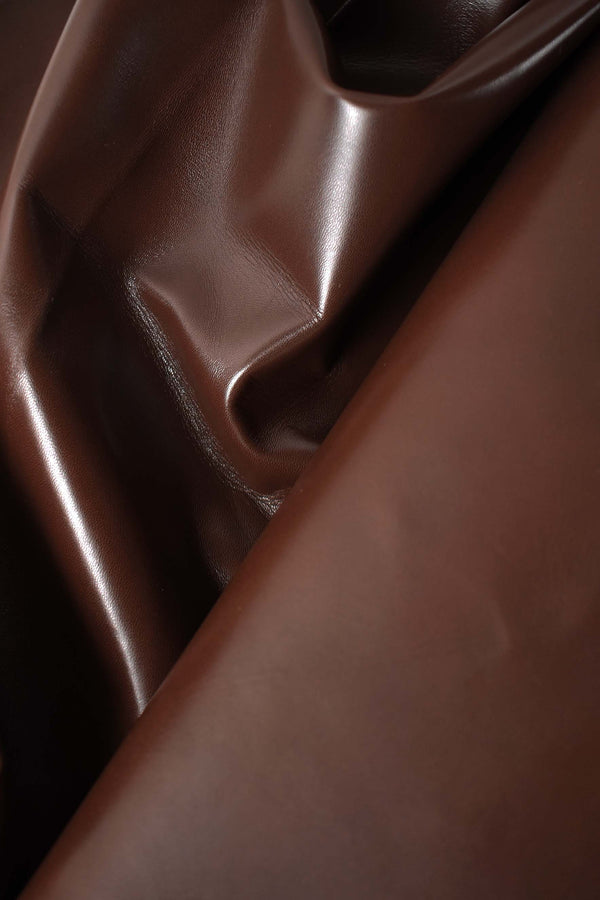
Goatskin for shoes
In footwear, goat is valued for its balance of lightness, strength and breathability. It is used for the uppers of classic shoes, loafers, ankle boots and sneakers, where it copes well with the flex of each step, and above all for linings, which need to be thin, smooth and able to absorb moisture. The most common thicknesses range from 0.6 to 1.2 mm.
Other uses
- Gloves, especially in thin, precise kid.
- Soft bags and small leather goods: wallets, card holders, pouches.
- Bookbinding and desk accessories, in the morocco tradition.
- Jackets and garments, in the softest nappas.
Working with goatskin and caring for it
- Plan your layout: skins are small, so use them efficiently and place visible pieces in the most even areas.
- Cut with a sharp knife or cutter, checking grain direction between adjacent pieces.
- Use leather needles and an even stitch; reinforce stress points on thin weights.
- Finish edges with edge paint and burnishing, or turn them.
- For care, dust and condition with a product suited to the finish; for suede, use a brush and protective spray.


Where to buy deadstock goatskin leather
Zerow sells deadstock goat and kid leather: surplus and end-of-run skins from Italian luxury houses and tanneries, already made and so needing no new production. Quantities are limited and variants are rarely repeated: once a skin is gone, it may not come back.
Leathers are sold by the skin, so you choose how many skins you need. Each product page shows the average m² per skin, the thickness, the tannage and the other specifications. Businesses with a VAT number have dedicated terms, and samples are available to everyone.
Our goatskin collection includes smooth kid, nappa, full grain, tumbled, vegetable-tanned, suede and lining goat. For an overview of all leathers, read our guide to the types of leather.
Goatskin leather FAQs
Is goat leather durable?
Yes: weight for weight it is one of the strongest leathers, thanks to its dense, interwoven fibres. That is why it is so widely used for shoe uppers and linings.
Goat or calf for shoes?
Calf is denser and gives a smoother, more uniform look; goat is lighter, more flexible and breathable, with a more natural grain. Many shoes use calf outside and goat as the lining.
What is kid leather?
It is leather from young goats: thinner, finer and silkier than adult goat, used for elegant shoes, gloves and fine leather goods.
What is morocco leather?
It is a vegetable-tanned goatskin, traditionally with sumac, glossy and with a small pebble grain, used above all in bookbinding.
Can I order a sample before buying?
Yes, samples are available to all Zerow customers, private and business, leathers included. It is the best way to judge grain, handle and colour in person.


